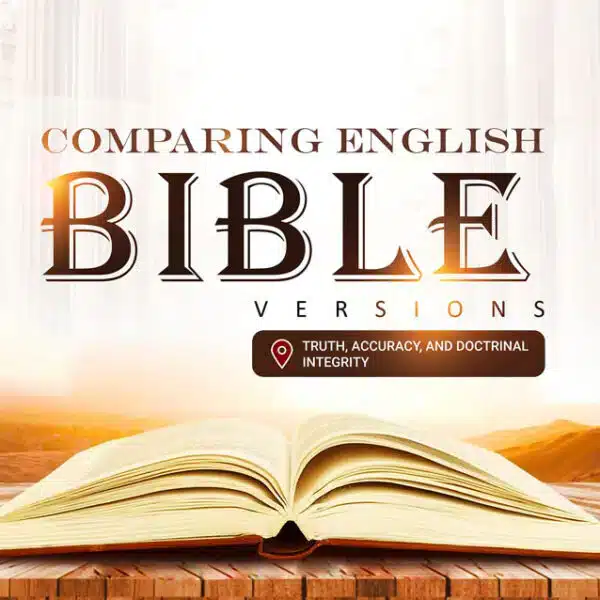
The English Bible has undergone numerous revisions and translations since the Geneva Bible (1560) and the King James Bible (1611). While some updates were made for readability, many modern versions introduce doctrinal shifts, omit key verses, and alter the meaning of Scripture. Understanding these differences is crucial for believers seeking the most accurate, God-honoring translation.
The Bible – A Foundation Under Attack
The Bible is the inspired Word of God, given to humanity as a guide to salvation, truth, and righteousness. However, throughout history, the integrity of God’s Word has been challenged, altered, and in some cases, corrupted. While many assume that all modern Bible translations carry the same message, the reality is that significant changes have taken place—many of which distort key doctrines, remove critical teachings, and introduce subtle yet dangerous deceptions.
The question must be asked: Does every Bible version truly represent the Word of God, or have modern translations been deliberately altered to fit an agenda?
The Battle Over God’s Word
From the Garden of Eden to today, Satan’s primary strategy has been to twist and manipulate God’s words. His first recorded act of deception was altering God’s command in Genesis 3:1—“Yea, hath God said…?”—planting doubt in Eve’s mind. This same tactic continues today through subtle changes in Scripture that impact doctrine, prophecy, and even the deity of Christ.
Understanding the history and corruption of Bible versions is crucial for believers who desire to stand on the pure, unaltered Word of God. Many modern versions are based on manuscripts that differ significantly from the preserved text used by the early church and faithful translators throughout history.
The Two Competing Streams of Manuscripts
All English Bible translations are based on one of two major manuscript families:
1️⃣ The Majority Text / Textus Receptus (Received Text)
🔹 Used by faithful believers throughout church history.
🔹 Preserved by God’s providence and used for translations like the King James Version (KJV).
🔹 Aligns with the manuscripts used by the early church.
🔹 Maintains doctrinal purity, with no key omissions or alterations.
2️⃣ The Alexandrian Text (Critical Text / Westcott & Hort Text)
🔹 Derived from a minority of manuscripts (Vaticanus & Sinaiticus).
🔹 Formed the basis for most modern versions (NIV, ESV, NASB, etc.).
🔹 Contains thousands of deletions, doctrinal changes, and textual omissions.
🔹 Produced by men who held unorthodox beliefs about Christ and Scripture.
By comparing these two manuscript streams, it becomes clear that many modern translations systematically remove references to Jesus’ deity, diminish His atonement, and introduce confusion about core doctrines. The question then arises: Why would translators remove or change God’s Word unless there was an agenda behind it?
What Has Been Corrupted?
While some argue that modern translations simply make the Bible “easier to understand,” the deeper issue is that they change the actual meaning of Scripture. Many verses have been removed, altered, or paraphrased in a way that weakens biblical truth.
Some of the most concerning changes include:
🔹 The removal of entire verses (e.g., Matthew 17:21, Acts 8:37, 1 John 5:7).
🔹 The omission of Jesus’ name in key passages (e.g., Colossians 1:14).
🔹 The weakening of Christ’s divinity (e.g., 1 Timothy 3:16).
🔹 The removal of words tied to spiritual warfare (e.g., “Lucifer” in Isaiah 14:12 replaced with “morning star,” confusing Jesus with Satan).
🔹 Doctrinal shifts that downplay the blood of Christ, fasting, and repentance.
Each change, whether minor or major, influences how Scripture is interpreted and understood. When enough of these alterations accumulate, they create a different gospel—one that subtly undermines biblical truth.
How This Affects Prophecy & End-Time Deception
One of the most alarming aspects of Bible corruption is its effect on prophecy. Many modern versions weaken or obscure key prophetic passages related to the Antichrist, the Great Tribulation, and the return of Christ. By altering these passages, Satan seeks to confuse believers about end-time events, making them vulnerable to deception.
For example:
🔹 Revelation 13:18 (the verse about the mark of the beast) is phrased differently in some versions, creating confusion about its meaning.
🔹 2 Thessalonians 2:3 (which speaks of a falling away before the Antichrist is revealed) is changed in some versions to mean “the rapture,” altering the prophetic timeline.
🔹 Daniel 3:25 removes the phrase “the Son of God,” replacing it with “a son of the gods,” weakening the prophetic connection to Christ.
Satan knows that if he can corrupt the Bible, he can confuse the church and prepare the world for deception. This is why understanding the corruption of modern Bible versions is not a secondary issue—it is a matter of spiritual life and death.
Why This Study Matters
As believers, we are called to stand on the pure, unaltered Word of God. Jesus said, 📖 “Heaven and earth shall pass away, but my words shall not pass away” (Matthew 24:35). If we truly believe this, we must ask ourselves: Where is His Word preserved? Has God allowed His Word to be lost, or has He preserved it through faithful manuscripts and translations?
This study will expose the differences between Bible versions, analyze key changes, and equip readers with the knowledge to discern which Bible carries the true, uncorrupted Word of God.
Next, we will begin breaking down each English Bible version, examining what changed, who was behind it, and how it affects doctrine.
The New King James Version (NKJV) – 1982
The New King James Version (NKJV) was published in 1982 as an attempt to “update” the King James Bible (KJV) while maintaining its traditional manuscript base. However, while the NKJV claims to follow the Textus Receptus, its underlying influences from modern textual criticism raise concerns about its faithfulness to the original KJV.
📜 Key Historical Facts:
- Commissioned by Thomas Nelson Publishers, promoted as a “modern KJV.”
- Sought to replace archaic words while retaining KJV structure.
- Claimed to follow the Textus Receptus, but incorporated footnotes from the Critical Text (Nestle-Aland manuscripts).
- Introduced subtle textual shifts that align with modern translations.
Though it appears to preserve the foundation of the KJV, the NKJV contains textual compromises that open the door for modernist interpretations.
Doctrinal Integrity & Theological Shifts
While the NKJV retains many traditional verses, it introduces subtle changes that weaken biblical clarity and confuse manuscript authority.
Key Differences & Theological Concerns

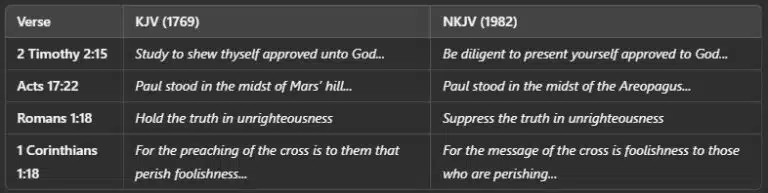
These subtle word changes may appear minor, but they shift meaning, leading to different interpretations over time. The NKJV’s use of Critical Text footnotes also raises doubt about the authenticity of key KJV readings, even though they are included in the main text.
The Hidden Danger: Opening the Door to the Critical Text
While the NKJV claims to follow the Textus Receptus, it frequently references Critical Text variants in footnotes, such as:
- “NU-text omits this verse…”
- “Majority Text reads differently…”
This subtle compromise plants doubt about the authority of the Textus Receptus, making it easier for readers to eventually accept modern Critical Text-based Bibles like the NIV, ESV, and NASB.
How the NKJV Paved the Way for Further Corruption
- Introduced modernized wording that aligns with later versions.
- Included manuscript footnotes that cast doubt on traditional readings.
- Served as a stepping stone toward accepting full Critical Text-based translations.
While not as corrupt as the NIV, the NKJV still subtly erodes confidence in the preserved Word of God.
Legacy of the NKJV: A Trojan Horse Translation?
Why the NKJV Must Be Examined Carefully
- Claims to be based on the Textus Receptus, yet introduces Critical Text influence.
- Rewords key passages, altering doctrinal clarity.
- Includes footnotes that weaken confidence in the traditional text.
- Was promoted as a “safe alternative” to the KJV, but serves as a bridge to more corrupt translations.
Current Availability & Lasting Impact
The NKJV remains widely used, especially by those who find the KJV’s language difficult, but it fails to fully preserve the authority of the traditional text. Many who begin with the NKJV eventually transition to more liberal translations due to its acceptance of modern textual criticism.
Conclusion: The NKJV Opens the Door to Further Compromise
The New King James Version (1982) presents itself as a faithful update to the KJV, but its subtle changes, Critical Text footnotes, and modernized wording make it a bridge toward doctrinal erosion. While it may appear close to the KJV, its compromises reveal a dangerous shift in manuscript trust.
📖 Next, we will analyze the English Standard Version (ESV) (2001) and its impact on biblical interpretation.