
The Rise of the Kings – The Beginning of the King of the North and King of the South
Daniel chapter 11 contains one of the most detailed prophecies ever recorded in Scripture. Written more than two thousand years ago, it traces the rise and fall of powerful kingdoms that would dominate the ancient world and ultimately influence the closing events of earth’s history.
The chapter introduces two opposing powers known as the King of the North and the King of the South. At first these powers are literal kingdoms surrounding the land of Israel. Yet as the prophecy unfolds through history, these titles begin to represent something much deeper than geography. They reveal two spiritual forces that have shaped the world for centuries—one characterized by open rebellion against God, and the other by corrupted religious authority.
Understanding the beginning of this prophecy is essential. The events described in the early verses of Daniel 11 lay the historical foundation that allows us to understand the far more dramatic events described later in the chapter. As we examine the rise of Persia, the sudden appearance of Greece, and the division of Alexander’s empire, we begin to see how precisely God revealed the course of history long before it happened.
Seeking the Guidance of the Holy Spirit
Before exploring the details of prophecy, it is important to approach Scripture with humility and prayer. The purpose of prophecy is not merely intellectual curiosity—it is preparation for the events leading to the return of Christ.
📖 1 Corinthians 2:10 – “But God hath revealed them unto us by his Spirit: for the Spirit searcheth all things, yea, the deep things of God.”
The understanding of prophecy comes through the guidance of the Holy Spirit. Without divine guidance, prophetic symbols can easily be misunderstood.
📖 James 1:5 – “If any of you lack wisdom, let him ask of God, that giveth to all men liberally, and upbraideth not; and it shall be given him.”
As we begin this study, we should prayerfully ask God to guide our understanding. The prophecies of Daniel were given to help God’s people recognize the movements of history and prepare their hearts for the time of the end.
The Setting of the Vision
The prophecy of Daniel 11 does not stand alone. It is actually the continuation of a vision that began in the previous chapter.
Daniel had been deeply troubled by the condition of his people and had spent time fasting and praying. During this time, he received a powerful vision revealing future events.
📖 Daniel 10:14 – “Now I am come to make thee understand what shall befall thy people in the latter days: for yet the vision is for many days.”
The angel explained that the prophecy would describe events affecting God’s people far into the future. What follows in chapter 11 is therefore a long historical prophecy extending across many centuries.
Persia: The Power That Began the Prophecy
The prophecy begins during the time of the Persian Empire.
📖 Daniel 11:2 – “And now will I shew thee the truth. Behold, there shall stand up yet three kings in Persia; and the fourth shall be far richer than they all: and by his strength through his riches he shall stir up all against the realm of Grecia.”
After the reign of Cyrus, several rulers would continue the Persian dynasty. The prophecy highlights a fourth king who would become exceptionally wealthy and powerful. Many historians identify this ruler as Xerxes I, who launched a massive campaign against Greece. His military expedition involved hundreds of thousands of soldiers and enormous resources.
Although Persia appeared unstoppable at the time, this conflict with Greece would ultimately trigger the rise of a new empire that would sweep across the ancient world.
The Rise of Greece and Alexander the Great
The prophecy next describes the sudden rise of a powerful king.
📖 Daniel 11:3 – “And a mighty king shall stand up, that shall rule with great dominion, and do according to his will.”
This verse points directly to Alexander the Great, the Macedonian ruler who defeated the Persian Empire and established one of the largest empires the world had ever seen. Alexander’s conquests were astonishingly rapid. Beginning in 334 BC, he defeated Persian forces in a series of decisive battles. Within just a few years he controlled territory stretching from Greece to Egypt and deep into Asia.
The speed and scale of Alexander’s victories shocked the ancient world. Yet centuries before these events occurred, the prophecy of Daniel had already foretold the rise of this mighty king.
This same empire had also been symbolized earlier in prophecy.
📖 Daniel 8:21 – “And the rough goat is the king of Grecia: and the great horn that is between his eyes is the first king.”
The Sudden Fall of Alexander’s Empire
Despite its enormous power, Alexander’s empire did not last long after his death.
📖 Daniel 11:4 – “And when he shall stand up, his kingdom shall be broken, and shall be divided toward the four winds of heaven; and not to his posterity…”
Alexander died unexpectedly at the age of thirty-two, leaving no clear successor to his throne. As a result, his vast empire eventually fractured and was divided among his generals.
Four major powers emerged from this division:
• Cassander ruled Macedonia and Greece
• Lysimachus ruled Thrace and Asia Minor
• Seleucus ruled Syria and eastern territories
• Ptolemy ruled Egypt
Although four kingdoms arose, the prophecy begins to focus primarily on two of them.
The First King of the North and King of the South
As the prophecy continues, two rival powers begin to dominate the narrative.
📖 Daniel 11:5 – “And the king of the south shall be strong, and one of his princes…”
These two kingdoms were:
King of the South – The Ptolemaic kingdom of Egypt
King of the North – The Seleucid kingdom of Syria
The reason these two powers become central to the prophecy is because Israel was located directly between them. Control of this region was strategically important, and both kingdoms repeatedly fought to dominate the territory.
Because of their geographical positions relative to Israel, they became known prophetically as the King of the North and the King of the South.
The Spiritual Meaning Behind the South
Although the early part of the prophecy describes literal kingdoms, the Bible often uses these nations to symbolize deeper spiritual attitudes.
Egypt, the original southern kingdom, represents a worldview that openly rejects God’s authority.
📖 Exodus 5:2 – “And Pharaoh said, Who is the LORD, that I should obey his voice… I know not the LORD.”
This statement from Pharaoh captures the spirit of Egypt perfectly. It reflects the attitude that human power stands above divine authority. Throughout history, this spirit has appeared repeatedly in systems and movements that reject God, deny Scripture, or attempt to remove religion from society.
The Emerging Pattern of the North
The northern kingdoms eventually came under the control of Rome, which later transformed from a political empire into a powerful religious authority. Unlike the southern spirit that openly rejects God, the northern system often claims religious authority while altering or mixing truth with human traditions.
Jesus warned about this danger during His ministry.
📖 Matthew 15:9 – “But in vain they do worship me, teaching for doctrines the commandments of men.”
This contrast between rebellion against God and corruption of God’s truth becomes an important theme that continues throughout the rest of the prophecy.
Two Systems in Conflict – Egypt and Babylon
As the prophecy of Daniel unfolds, it becomes clear that the conflict between the King of the North and the King of the South represents more than simply military struggles between ancient nations. These kingdoms also symbolize two opposing spiritual systems that have influenced human history for centuries.
The southern power originally arose from Egypt, a nation that openly resisted the authority of God.
📖 Exodus 5:2 – “And Pharaoh said, Who is the LORD, that I should obey his voice to let Israel go? I know not the LORD, neither will I let Israel go.”
Pharaoh’s response to Moses reveals the defining characteristic of Egypt’s spirit: the rejection of God’s authority. Egypt did not pretend to represent God. Instead, it openly opposed Him and refused to acknowledge His law. This attitude appears repeatedly throughout history whenever societies reject the authority of Scripture and elevate human reason or political power above the Word of God.
In contrast, another system appears throughout the Bible that does not openly reject God but instead corrupts or alters His truth. This system is symbolized by Babylon. Babylon claimed religious authority while promoting practices and beliefs that departed from God’s commandments. Throughout Scripture, Babylon becomes a symbol of false or corrupted religion.
The book of Revelation draws this same contrast when describing the final conflict of earth’s history.
📖 Revelation 11:8 – “And their dead bodies shall lie in the street of the great city, which spiritually is called Sodom and Egypt, where also our Lord was crucified.”
Here the spirit of Egypt again appears as a symbol of rebellion against God. At the same time, Revelation also identifies Babylon as the system that spreads religious deception throughout the world.
📖 Revelation 17:5 – “And upon her forehead was a name written, Mystery, Babylon the Great, the Mother of Harlots and Abominations of the Earth.”
These two symbolic systems reveal the deeper meaning behind the prophecy of the King of the North and the King of the South.
- One system openly rejects God and His authority — the spirit of the King of the South.
- The other claims to represent God while mixing truth with human tradition and authority — the spirit of the King of the North.
Both ultimately oppose the pure truth of Scripture.
The prophecy of Daniel shows these two systems appearing repeatedly throughout history under different forms and powers. Yet the Bible also reveals that God will have a people who refuse both deception and rebellion.
📖 Revelation 14:12 – “Here are they that keep the commandments of God, and the faith of Jesus.”
These believers stand apart from both systems. They do not reject God’s authority like Egypt, and they do not follow corrupted religious authority like Babylon. Instead, they return to the simple authority of God’s Word and the faith of Jesus Christ.
Why Fulfilled Prophecy Matters
The early portion of Daniel 11 provides one of the clearest demonstrations of fulfilled prophecy in the entire Bible. The rise of Persia, the appearance of Greece, the career of Alexander the Great, and the division of his empire all occurred exactly as the prophecy described.
This accuracy reminds us that history unfolds according to God’s knowledge and authority.
📖 Isaiah 46:9–10 – “I am God, and there is none like me, declaring the end from the beginning, and from ancient times the things that are not yet done.”
If God accurately foretold the rise and fall of ancient empires, we can trust that the remaining prophecies concerning the time of the end will also be fulfilled.
From Greece to Rome
The wars between the northern and southern Greek kingdoms continued for generations, gradually weakening both powers. As their influence declined, a new empire began rising in the west. This new power would eventually conquer the Mediterranean world, control the land of Israel, and play a central role in the most important event in human history — the crucifixion of Jesus Christ.
That empire was Rome.
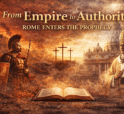
In the next study, we will explore how Rome enters the prophecy of Daniel 11, how the Prince of the Covenant appears in the prophetic timeline, and how the identity of the King of the North begins to shift toward a power that would influence both religion and politics for centuries.
Looking Ahead
The early part of Daniel 11 describes the conflicts between the Greek kingdoms of the north and south. Yet the prophecy does not end there. As these kingdoms weaken through constant warfare, a new power begins to rise in the west—one that will reshape the world and dramatically influence the course of Christian history.
This power is Rome.
In the next study, we will explore how Rome enters the prophecy, how the identity of the King of the North begins to shift, and how the events of Daniel 11 connect directly to the crucifixion of Christ and the development of powerful religious systems that would dominate the centuries that followed.
The prophecy that began with ancient empires will eventually lead us to the final events just before Michael stands up and the great controversy reaches its conclusion.
Pages in Series:
Overview Page
Part 1 – The Rise of the Kings
Part 2 – Rome Enters the Prophecy
Part 3 – The Final Clash