
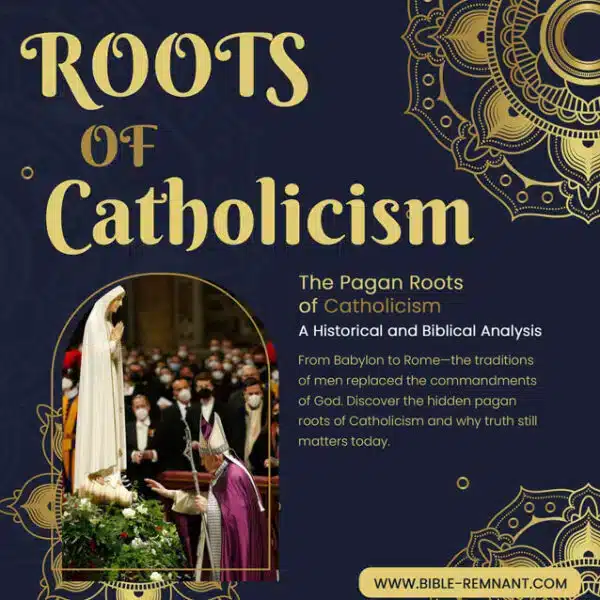
Throughout history, Satan has sought to corrupt pure worship by blending truth with error. What began in Eden with the serpent’s subtle question—“Hath God said?”—continued through Babylon’s idols, pagan rituals, and false worship systems. These counterfeits never disappeared; they were repackaged, passed down, and eventually cloaked in religious garments.
The Catholic Church, though claiming to be founded on Christ, has adopted many of these pagan traditions. From sun worship woven into Sunday observance, to idols replacing the worship of the living God, to rituals rooted in mystery religions—what many see as “Christian tradition” often has no foundation in Scripture, but in Babylon.
📖 Mark 7:7–9 – “Howbeit in vain do they worship me, teaching for doctrines the commandments of men. For laying aside the commandment of God, ye hold the tradition of men…”
🔎 Jesus warned that man-made traditions can nullify God’s Word. History shows us this warning fulfilled in a global system that mixes truth with paganism.
Our goal in this study is not to insult friends and loved ones who have been raised in Catholicism, but to lovingly reveal truth. Many sincere believers are trapped in a system built on compromise, yet God calls His people out of Babylon (Revelation 18:4).
The Transformation of Christianity Under Rome
Many today assume that the Roman Catholic Church is simply the original form of Christianity, passed down from the apostles. However, history tells a different story. The fusion of Christianity with Roman political and religious systems created a distorted version of the faith, merging biblical truth with pagan influences.
To understand this transformation, we must examine:
✔ How the early church operated before Roman influence.
✔ How the Roman Empire’s control changed the direction of Christianity.
✔ The role of Constantine in merging paganism with the faith.
✔ The lasting effects of Rome’s corruption on modern Christianity.
✔ The adoption of pagan traditions in worship and practice.
✔ Catholicism’s direct parallels with Babylonian paganism.
✔ Biblical warnings about traditions corrupting true worship.
✔ The consequences of choosing man’s tradition over God’s Word.
✔ The prophetic call to return to Scripture alone as the final authority.
📖 2 Thessalonians 2:3 – “Let no man deceive you by any means: for that day shall not come, except there come a falling away first…”
🔥 Paul warned of a great apostasy—a falling away from the pure faith of the apostles. History reveals that this falling away came through compromise with Rome.
The Pure Church Before Rome – Founded on Christ and the Apostles
Before emperors and councils, before cathedrals and creeds, the church of Christ was a simple, Spirit-filled body of believers. It was not built on pomp or ritual, but on the power of the gospel, obedience to God’s Word, and the living presence of the Holy Spirit.
📖 Acts 2:42 – “And they continued stedfastly in the apostles’ doctrine and fellowship, and in breaking of bread, and in prayers.”
🔎 The early church was rooted in four things: the teachings of Christ through the apostles, fellowship among believers, the breaking of bread in remembrance of Jesus, and fervent prayer.
❤️ Worship in Simplicity – They met in homes, gathered in open spaces, and devoted themselves to prayer and teaching. There were no grand cathedrals, no images or icons, no elaborate rituals—only Spirit and truth (John 4:24).
❤️ The Sabbath and God’s Law – The first believers, both Jews and Gentiles, honored the seventh-day Sabbath as Christ Himself had kept. The Ten Commandments were upheld as God’s eternal law, not as burdens but as the standard of holy living (Romans 7:12).
❤️ Separation from Idolatry – Surrounded by Rome’s temples and idols, the church refused to bow to false gods. Many were persecuted or killed for rejecting Caesar’s worship, yet they held firm that only Jesus is Lord.
❤️ Led by the Spirit, Not by Rome – There was no pope, no political overseer. Leadership was local—elders, deacons, and apostles guided the flock. Authority was spiritual, not imperial.
📖 Acts 17:6 – “These that have turned the world upside down are come hither also.”
🔎 The early believers, with no wealth, armies, or institutions, shook the Roman Empire by their faith alone.
This was the church Christ founded: pure, humble, Spirit-led, and unshakable. But as the gospel spread and persecution increased, a great danger arose—not from without, but from within. Compromise with Rome would soon reshape the church into something Christ never intended.
Rome’s Influence and the Birth of Compromise
For nearly three centuries, the Roman Empire viewed Christians as a threat. Refusing to worship Caesar, rejecting idols, and spreading allegiance to “another King, one Jesus” (Acts 17:7) made them enemies of the state. Thousands were imprisoned, tortured, and thrown to the lions. Yet persecution only made the church stronger—the blood of martyrs became the seed of the church.
But Satan, failing to crush the church from the outside, changed his strategy. If persecution could not destroy God’s people, compromise could corrupt them.
Constantine and the Marriage of Church and State
In the early 4th century, Emperor Constantine claimed to have seen a vision of the cross before a battle, leading him to favor Christianity. With the Edict of Milan (313 AD), persecution ceased, and Christianity was legalized. At first, this seemed like victory for the church—but it came with a deadly price.
⛓️ From Persecuted to Privileged – Christians went from hunted outcasts to state-sponsored citizens. The church began to enjoy wealth, power, and influence, but lost its purity and humility.
⛓️ Paganism Baptized as Christianity – To unite his empire, Constantine blended pagan customs with Christian faith. Pagan temples became churches. Pagan priests became bishops. Pagan festivals were rebranded with Christian names.
⛓️ The Rise of Clergy Power – Leadership shifted from humble elders to politically appointed bishops. Eventually, the Bishop of Rome rose in power, setting the stage for the papacy.
📖 2 Thessalonians 2:7 – “For the mystery of iniquity doth already work…”
🔎 Even in Paul’s day, seeds of compromise were forming. Under Rome, they sprouted into a system where man’s traditions began to overshadow God’s commands.
The Long-Term Effect
The faith that once stood in opposition to Rome’s idolatry was now married to it. Instead of being a separate, holy people, the church became an extension of the empire. The dragon had succeeded: not by open war, but by infiltration.
📖 Revelation 12:17 – “And the dragon was wroth with the woman, and went to make war with the remnant of her seed, which keep the commandments of God, and have the testimony of Jesus Christ.”
🔎 From this union of church and state came centuries of persecution against those who resisted compromise—true followers of Christ who clung to Scripture above Rome’s traditions.
The question now was not whether the church would survive persecution, but whether it would survive the corruption of power.
The Adoption of Pagan Traditions
When Constantine united church and empire, compromise became the policy. To make Christianity appealing to Rome’s vast pagan population, elements of idol worship, mystery religion, and sun cults were repackaged as “Christian” practices. These changes were not led by Scripture, but by political convenience and spiritual deception.
📖 Jeremiah 10:2 – “Learn not the way of the heathen…”
🔎 Yet this is exactly what the church did—absorbing pagan customs into worship, rather than resisting them.
⛓️ Sunday and Sun Worship – The first and clearest compromise was the change from the seventh-day Sabbath to the first day of the week. Pagan Rome already worshiped the sun on “dies Solis” (the day of the sun). Constantine’s decree in 321 AD enforced Sunday observance, giving it both civil and religious authority.
📖 Ezekiel 8:16 – “…they worshipped the sun toward the east.”
🔎 What God condemned in Israel was now dressed in Christian garments.
⛓️ Idols and Images – Pagan temples were filled with statues of gods and goddesses. To ease conversion, Rome simply replaced these idols with “saints” and “Mary.” Bowing, incense, and prayers directed at images—all once pagan—became normalized in the church.
📖 Exodus 20:4–5 – “Thou shalt not make unto thee any graven image… thou shalt not bow down thyself to them.”
🔎 Clear commandment was replaced by compromise.
⛓️ Festivals and Holy Days – Pagan feasts were relabeled as Christian holidays. Saturnalia (a festival of drunkenness and gift-giving) was renamed “Christmas.” Spring fertility rites honoring Ishtar were rebranded as “Easter.” Instead of honoring God’s appointed feasts, the church absorbed Rome’s calendar of idols.
📖 Daniel 7:25 – “He shall think to change times and laws.”
⛓️ Confession to Priests – In Babylon’s mystery religions, people confessed sins to a priest, who claimed authority to absolve them. Catholicism revived this, though Scripture teaches only Christ can forgive sin (1 John 1:9).
📖 1 Timothy 2:5 – “For there is one God, and one mediator between God and men, the man Christ Jesus.”
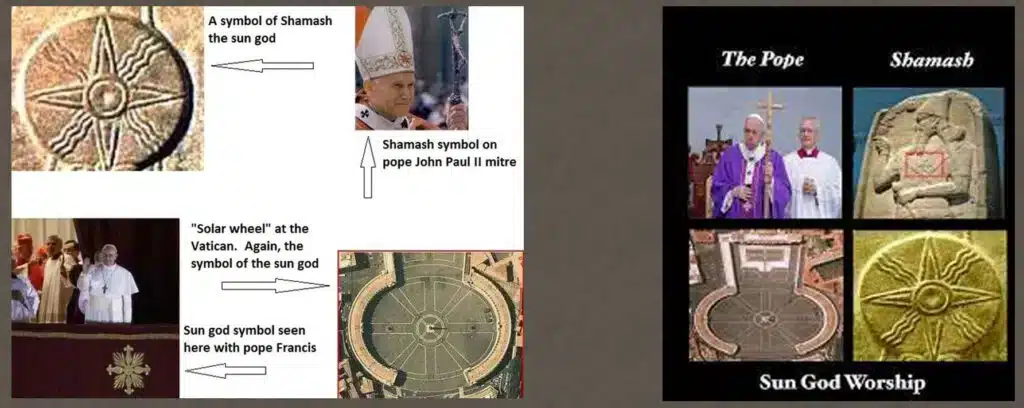
⛓️ The Eucharist and Sun Worship – Babylonian sun worship centered on offering cakes to the sun god. Catholicism replaced this with the Eucharist, teaching that the wafer becomes Christ’s literal body. Its round shape reflects the ancient solar disk, often displayed in a monstrance like rays of the sun.
📖 John 6:63 – “…the flesh profiteth nothing: the words that I speak unto you, they are spirit, and they are life.”
⛓️ Vestments, Incense, and Rituals – Priests in Rome’s mystery religions wore elaborate robes, offered incense, and performed rituals in Latin. These practices were baptized into Christianity, though the apostles never commanded them. The simplicity of worship in spirit and truth gave way to pomp and ceremony.
📖 John 4:24 – “God is a Spirit: and they that worship him must worship him in spirit and in truth.”
⛓️ Temples and Altars – Pagan Rome built grand temples filled with idols. Catholicism transformed these into cathedrals, where statues of Mary, saints, and angels are venerated. Yet God commanded no such images, only that His people be living temples (1 Corinthians 6:19).
⛓️ Prayers for the Dead – Rooted in pagan ancestor worship, Rome introduced prayers for souls in purgatory—something never taught in Scripture. The Bible is clear: “It is appointed unto men once to die, but after this the judgment” (Hebrews 9:27).
📖 Mark 7:8 – “For laying aside the commandment of God, ye hold the tradition of men.”
🔎 Step by step, tradition replaced truth.
These compromises did not happen overnight—they were gradual, subtle, and always justified as “helping pagans come to Christ.” But what entered the church was not Christ’s gospel—it was Babylon in disguise.
Additional Pagan Influences in Catholicism:
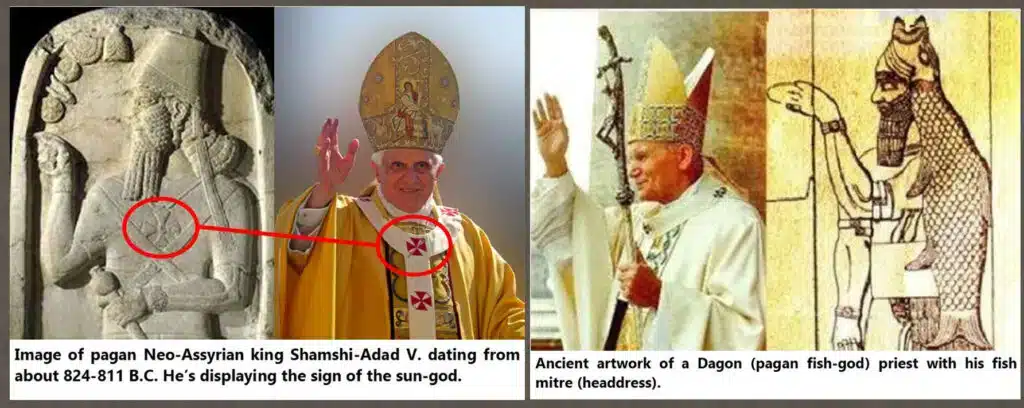
🔹 Mitre (Papal Hat) – Resembles the fish-shaped headdress of Dagon, the Philistine fish god.
🔹 Celibacy of Priests – Originated from pagan priesthoods, particularly in Rome and Babylon. The Bible teaches that leaders may marry (1 Timothy 3:2).
🔹 Confession to Priests – Parallels the Babylonian practice where priests acted as mediators between the people and gods. The Bible teaches confession is to God alone (1 John 1:9).
🔹 Infant Baptism – Derived from pagan purification rituals, whereas biblical baptism is for believers who repent (Acts 2:38).
🔹 Use of Incense in Worship – Common in ancient Babylonian and Egyptian rituals; not prescribed for New Testament believers.
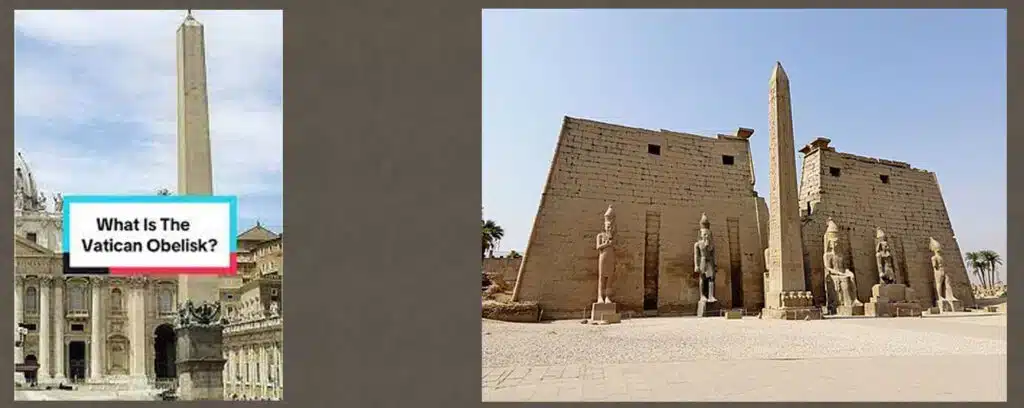
🔹 Obelisks in Vatican City – Ancient sun-worship symbols, originally from Egypt, placed in front of St. Peter’s Basilica.
🔹 Procession of Statues – Resembles ancient pagan religious parades where statues of gods were carried through cities.
🔹 Purgatory Doctrine – Rooted in Greco-Roman and Egyptian beliefs about the afterlife, not found in Scripture.
🔹 Catholic Mass Rituals – Many elements trace back to Mithraic and Roman pagan ceremonies.
🔹 Crowning of the Pope – Mirrors the enthronement of emperors and pagan high priests.
Comparative Chart: Catholicism vs. Babylonian Paganism

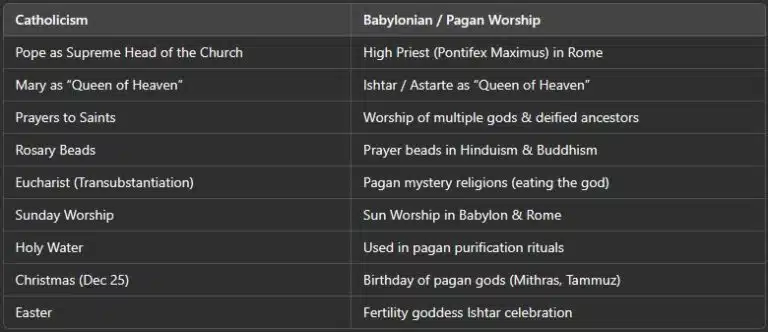
This chart highlights how Catholic traditions have direct correlations to ancient pagan customs. These were adopted not from the Bible but from pre-existing religions, blending paganism with Christian labels.
Biblical Patterns of Corruption – When God’s People Adopt Pagan Ways
The danger of compromise is not unique to the Catholic Church. Throughout history, God’s people have repeatedly fallen into the trap of adopting pagan practices. What happened in Rome is simply the latest and greatest form of an ancient pattern.
The Golden Calf – Worship on Their Own Terms
📖 Exodus 32:4–5 – “And he received them at their hand, and fashioned it with a graving tool… and they said, These be thy gods, O Israel, which brought thee up out of the land of Egypt.”
🔎 While Moses was on Mount Sinai receiving God’s law, Israel grew impatient. They didn’t reject God outright—they simply “repackaged” Him into an idol. This was worship mixed with paganism, and God called it abomination.
Baal Worship in Israel
📖 1 Kings 18:21 – “How long halt ye between two opinions? if the LORD be God, follow him: but if Baal, then follow him.”
🔎 Israel didn’t stop calling themselves God’s people, but they adopted Baal worship alongside Yahweh’s name. This mixture brought famine, judgment, and finally the showdown on Mount Carmel—where Elijah declared God alone must be worshiped.
Pharisaical Traditions
📖 Matthew 15:3 – “Why do ye also transgress the commandment of God by your tradition?”
🔎 By Christ’s time, religious leaders weren’t bowing to idols, but they had added endless traditions that obscured God’s law. In both idolatry and legalism, man’s way replaced God’s way.
The Pattern is Always the Same:
⛓️ Truth is revealed.
⛓️ Man adds his own traditions.
⛓️ Worship is corrupted.
⛓️ Judgment follows.
Rome repeated Israel’s mistake—mixing the worship of the true God with the traditions of Babylon. The result was a religion that looks holy outwardly but is corrupted at the root.
📖 1 Corinthians 10:11 – “Now all these things happened unto them for ensamples: and they are written for our admonition, upon whom the ends of the world are come.”
🔎 These warnings are not just history lessons—they are prophetic shadows for the last days.
Consequences of Following Traditions Over God’s Word
Many believe that religious traditions bring them closer to God, yet Scripture repeatedly warns that elevating human customs over God’s commands leads to spiritual blindness, false worship, and eventual judgment. Below, we explore the dangers of replacing biblical truth with man-made traditions.
Traditions Lead to Spiritual Blindness
📖 Isaiah 29:13 – “Wherefore the Lord said, Forasmuch as this people draw near me with their mouth, and with their lips do honour me, but have removed their heart far from me, and their fear toward me is taught by the precept of men.”
🔎 God exposes the deception of external religiosity—when people follow rituals with their mouths but lack true devotion in their hearts. The Israelites continued religious practices, yet their worship was shaped by human traditions rather than genuine obedience to God’s Word. This pattern still exists today in religious systems where traditions dictate worship, but hearts remain distant from God.
📖 Matthew 23:24 – “Ye blind guides, which strain at a gnat, and swallow a camel.”
🔎 Jesus rebuked the Pharisees, calling them blind guides because they meticulously followed religious traditions while ignoring weightier matters of the law—justice, mercy, and faith. Religious systems that prioritize rituals, external piety, and hierarchical structures over biblical truth create spiritual blindness, preventing people from seeing the true path of righteousness.
📖 2 Corinthians 4:4 – “In whom the god of this world hath blinded the minds of them which believe not, lest the light of the glorious gospel of Christ, who is the image of God, should shine unto them.”
🔎 Satan uses false religious traditions to blind people from the true gospel. When man-made teachings become central, Christ’s message of salvation, grace, and obedience to God’s commands is overshadowed by rituals and doctrinal distortions.
Traditions Can Nullify God’s Commandments
📖 Mark 7:7-9 – “Howbeit in vain do they worship me, teaching for doctrines the commandments of men. For laying aside the commandment of God, ye hold the tradition of men.”
🔎 Jesus makes it clear that worship rooted in human tradition is meaningless. Many religious institutions claim to uphold God’s Word, yet they prioritize man-made doctrines over biblical commandments. This was the error of the Pharisees, and it remains a serious issue today, as many churches elevate catechisms, councils, and traditions above the plain teachings of Scripture.
📖 Colossians 2:8 – “Beware lest any man spoil you through philosophy and vain deceit, after the tradition of men, after the rudiments of the world, and not after Christ.”
🔎 Paul warns believers to guard against deceptive traditions that lead them away from Christ. Many religious systems mix pagan philosophy, worldly reasoning, and human customs with biblical faith, creating a distorted form of Christianity that lacks true spiritual power.
📖 Matthew 15:3 – “But he answered and said unto them, Why do ye also transgress the commandment of God by your tradition?”
🔎 Jesus directly confronts the hypocrisy of religious leaders who nullify God’s law through tradition. Many religious institutions teach doctrines that contradict Scripture—from changes to the Sabbath, prayers to saints, and the exaltation of human leaders, to the celebration of pagan-based holidays. These traditions have no biblical foundation, yet they are widely accepted as Christian practices.
Traditions Result in False Worship
📖 Matthew 15:9 – “But in vain they do worship me, teaching for doctrines the commandments of men.”
🔎 False worship is worship based on human traditions rather than biblical truth. Many today believe they are serving God, yet their practices are rooted in religious customs that contradict His Word. When worship becomes about rituals, sacraments, and clerical authority instead of a personal relationship with Christ, it loses its spiritual authenticity.
📖 Deuteronomy 12:30-31 – “Take heed to thyself that thou be not snared by following them, after that they be destroyed from before thee; and that thou inquire not after their gods, saying, How did these nations serve their gods? even so will I do likewise.”
🔎 God explicitly commands His people not to adopt pagan religious practices. However, history shows that many elements of pagan worship were incorporated into Catholic and Christian traditions—from prayers for the dead, veneration of relics, festival observances, to the use of idols and graven images in worship. These practices are rooted in ancient idolatry rather than in the worship of the Most High.
📖 Revelation 17:4-5 – “And upon her forehead was a name written, MYSTERY, BABYLON THE GREAT, THE MOTHER OF HARLOTS AND ABOMINATIONS OF THE EARTH.”
🔎 The final religious deception is linked to Babylon, a system that blends truth with pagan traditions. Many religious institutions unknowingly follow Babylonian-style worship, replacing God’s truth with ceremonial rites, unbiblical sacraments, and hierarchical structures that elevate human authority over God’s law.
The Prophetic Warning for the Last Days – Come Out of Babylon
What began with compromise in Rome has grown into a global system of false worship. The Bible calls it “Mystery, Babylon the Great” (Revelation 17:5)—a power that looks religious, cloaked in wealth and tradition, yet drunk with the blood of the saints.
📖 Revelation 18:2 – “Babylon the great is fallen, is fallen, and is become the habitation of devils, and the hold of every foul spirit…”
🔎 Babylon is not just an ancient city—it is a symbol of false religion, deception, and man’s rebellion against God. Rome’s system is its clearest fulfillment in history.
📖 Revelation 18:4 – “Come out of her, my people, that ye be not partakers of her sins, and that ye receive not of her plagues.”
🔎 God still has people inside Catholicism—sincere believers who love Him but are trapped in tradition. His call is merciful and urgent: Come out before judgment falls.
Why This Matters for Us Today
The same compromises Rome embraced are creeping into modern Christianity—Sunday exaltation, acceptance of idols, ecumenical alliances that set aside truth for unity. Prophecy shows these traditions will climax in the end-time crisis, when worship becomes the final dividing line (Revelation 13:15–17). The blood of martyrs past warns us that those who cling to God’s Word over man’s authority will again be persecuted.
📖 Daniel 7:25 – “He shall speak great words against the most High, and shall wear out the saints of the most High, and think to change times and laws…”
🔎 Rome’s attempt to change God’s law is not just history—it is prophecy in motion. The same power will rise again at the end.
Claims of the Papacy – “Christ on Earth”
One of the most shocking proofs of Rome’s corruption is not found in rumor, but in its own writings. For centuries, papal decrees, canon laws, and historical documents have openly declared that the pope stands as “Christ on earth”—holding authority over heaven, earth, and even souls in purgatory.
📖 2 Thessalonians 2:4 – “Who opposeth and exalteth himself above all that is called God, or that is worshipped; so that he as God sitteth in the temple of God, shewing himself that he is God.”
🔎 Paul warned that the “man of sin” would exalt himself as God’s representative. The papal claims fit this prophecy with chilling precision.
A Few Examples:

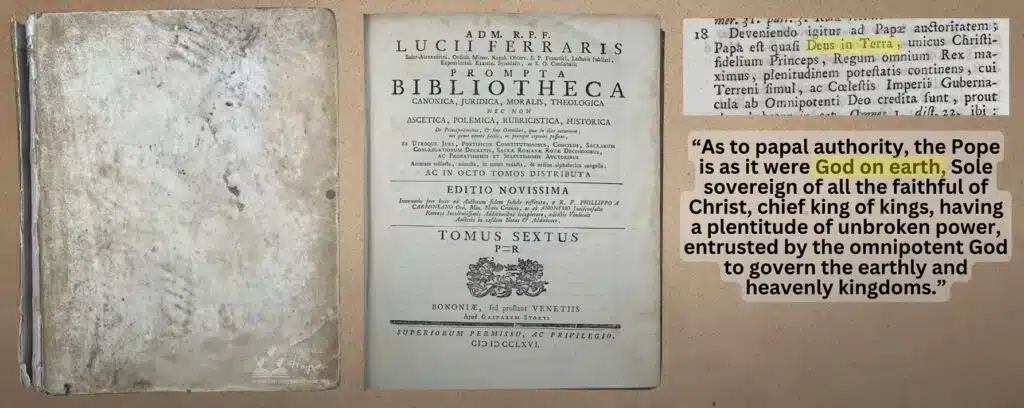
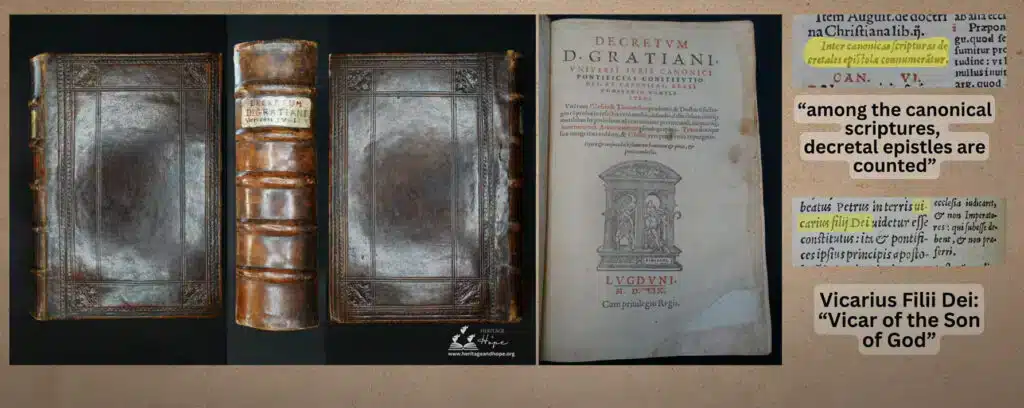
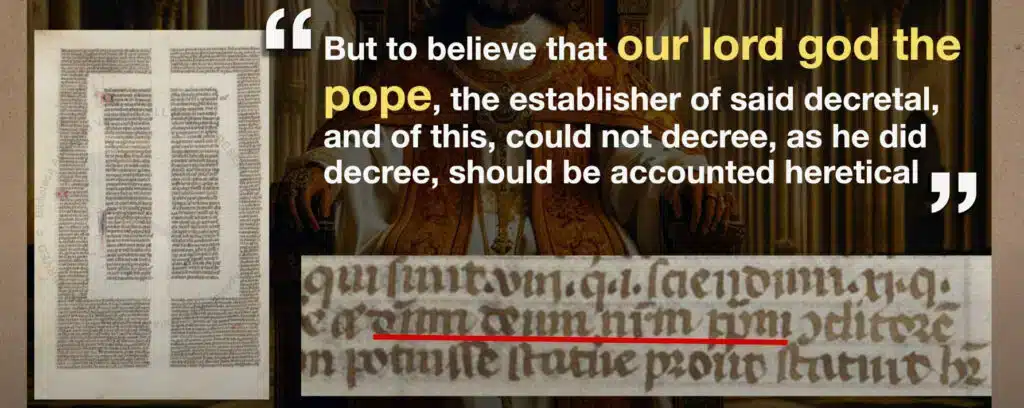
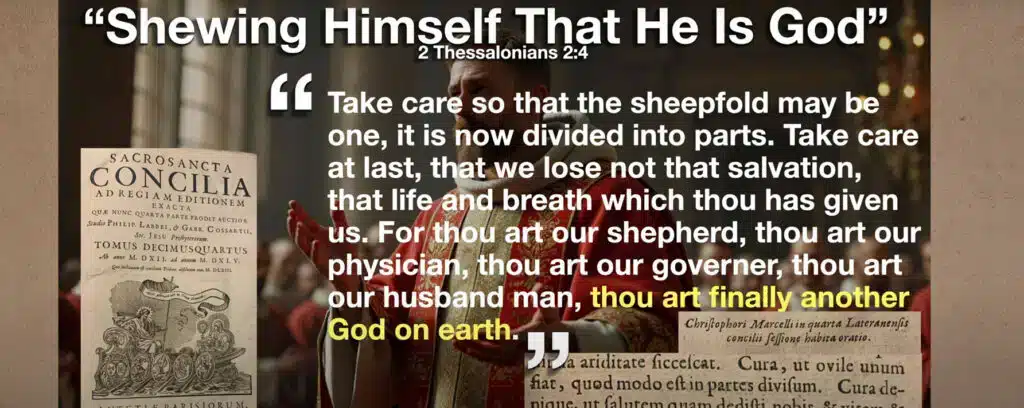
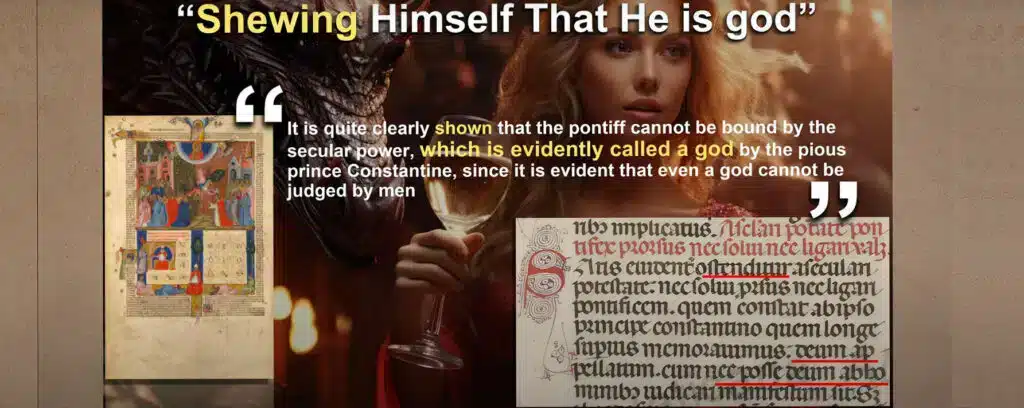
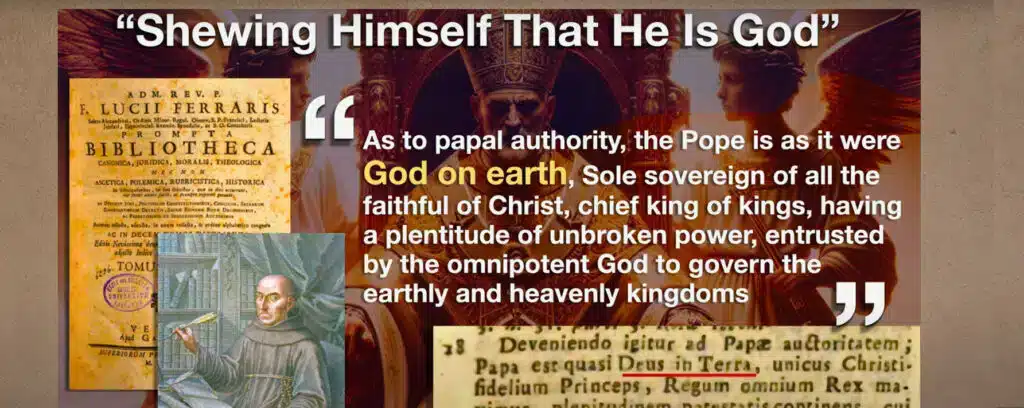
These documents reveal:
🩸 Titles such as “Vicar of Christ” and “Lord God the Pope.”
🩸 Assertions that papal authority is higher than Scripture itself.
🩸 Declarations that salvation is impossible outside submission to the pope.
From Idols to “Saints” – Pagan Images Rebranded
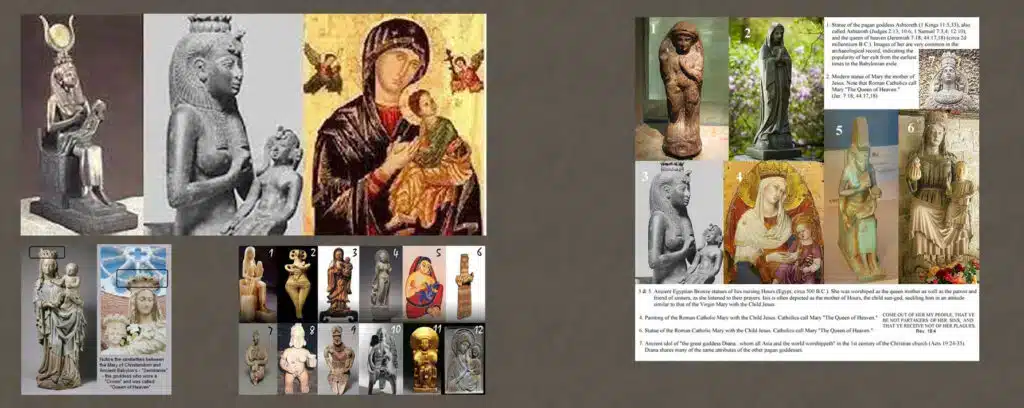
One of the clearest signs of Catholicism’s pagan roots is its use of images and pagan symbols. The Bible strictly forbids the making and bowing to idols (Exodus 20:4–5), yet Rome adopted the very practice God condemned. Ancient pagan gods and goddesses were not destroyed—they were simply renamed. Statues once worshiped as Jupiter or Diana were recast as Peter or Mary. Pagan mother-and-child depictions became the “Madonna and Child.” Temples filled with idols became cathedrals filled with saints.
📖 Acts 17:29 – “We ought not to think that the Godhead is like unto gold, or silver, or stone, graven by art and man’s device.”
🔎 What the pagans carved in ignorance, Rome embraced as “holy tradition.”
In this section, you will see side-by-side images of ancient idols and symbols, along with their Catholic equivalents. The similarities are undeniable: the same poses, symbols, and rituals—only with Christian names attached.
🔥 God does not want us to mix truth with error. These images are not aids to worship but stumbling blocks, pulling hearts from the Creator to the created.
The Call to Return to God’s Word – A Choice for Today
At the heart of this study is not just history, but destiny. The question is not only what Rome did centuries ago, but what we will do now. Will we continue in traditions rooted in Babylon, or return to the pure faith once delivered to the saints? (Jude 1:3).
📖 John 17:17 – “Sanctify them through thy truth: thy word is truth.”
🔎 Only God’s Word sanctifies and saves—not rituals, not traditions, not man-made decrees.
From the apostles onward, the true church has been marked by one thing: faithfulness to Christ above all. It was true when Christians were hunted in Rome. It was true when martyrs stood against the corruptions of the papacy. And it is true now, as the final conflict over worship draws near.
The Way Forward Is Clear:
✅ Leave behind the traditions of men that nullify the Word of God (Mark 7:13).
✅ Reject the mixture of paganism with Christianity.
✅ Embrace the call of Revelation 18:4—“Come out of her, my people.”
✅ Stand on Scripture alone, even if the world mocks, rejects, or persecutes you.
📖 Matthew 15:9 – “But in vain they do worship me, teaching for doctrines the commandments of men.”
📖 Psalm 119:105 – “Thy word is a lamp unto my feet, and a light unto my path.”
God is not calling us to religion—He is calling us to relationship. Not to cathedrals or councils—but to Christ Himself, the Rock of our salvation.
🔥 The pagan roots of Catholicism are exposed not to shame individuals, but to awaken hearts. Millions are trapped in a system that looks holy but denies the power of God’s Word. To them, God says: “Come out, My people.”
The choice is ours today. Will we follow tradition—or truth? Will we walk the wide road of Babylon, or the narrow road of Christ?
📌 Are you building your faith on man’s traditions—or God’s Word?
📌 If Christ Himself stood before you, would He recognize His teachings in your worship?
📌 Will you be among those who heed the call to come out of Babylon and follow the Lamb wherever He goes (Revelation 14:4)?