
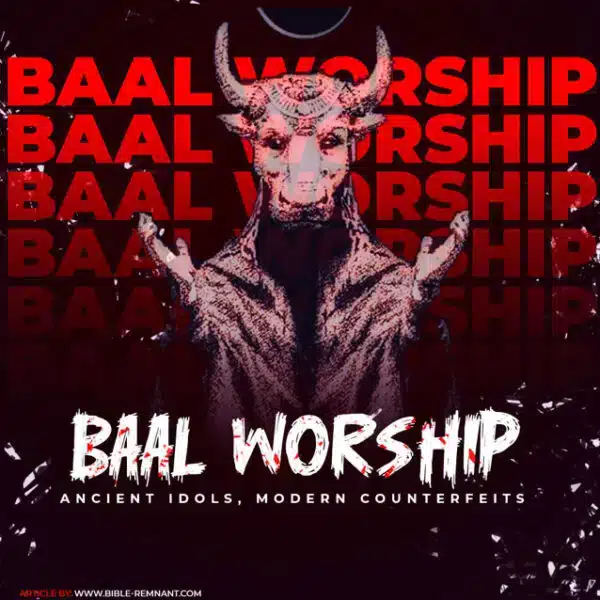
Baal worship is not just an ancient story—it is a pattern of rebellion that has resurfaced throughout history and still thrives in our world today. From the altars of Canaan to the spiritual compromises of modern Christianity, Baal represents more than a false god. It is the spirit of counterfeit worship: blending truth with error, exalting man’s desires above God’s Word, and drawing hearts away from the Living God.
📖 1 Kings 18:21 – “How long halt ye between two opinions? if the LORD be God, follow him: but if Baal, then follow him.”
🔎 Elijah’s challenge to Israel echoes across the centuries—it is the same question we face today.
Baal worship is not about statues alone—it is about loyalty. Who will we serve? God, who calls us to obedience and truth, or the spirit of Baal, which cloaks itself in culture, religion, and tradition but always leads to rebellion?
This study will uncover how Baal worship shaped Israel’s downfall, how it has crept into both Catholicism and Protestantism, and how it plays a central role in end-time deception. It is a warning—but also a call. God is raising up an Elijah people to expose false worship and call hearts back to Him before it’s too late.
What is Baal Worship? – The Counterfeit Lord
The word Baal in Hebrew literally means “lord” or “master.” In the ancient world, Baal was worshiped as the god of fertility, storms, and prosperity. To Israel’s pagan neighbors, Baal was the giver of rain and harvests, the one who determined life’s blessings and curses. But behind the name was not just a false idol of wood and stone—it was a demonic counterfeit designed to replace the worship of the true Lord, Yahweh.
📖 Judges 2:11 – “And the children of Israel did evil in the sight of the LORD, and served Baalim.”
🔎 The people did not abandon worship altogether—they simply exchanged the worship of the true God for a false substitute. That is the essence of Baal worship.
The Core Elements of Baal Worship
🩸 Idolatry – Visible symbols (altars, statues, groves) became substitutes for the invisible God.
🩸 Immorality – Ritual prostitution and sexual perversion were often tied to Baal’s worship.
🩸 Blood Sacrifice – In its darkest form, children were sacrificed to gain Baal’s “favor” (Jeremiah 19:5).
🩸 Counterfeit Authority – Baal was called “lord,” but his worship always pulled authority away from God and toward man-made religion.
📖 Jeremiah 23:27 – “…they think to cause my people to forget my name by their dreams which they tell every man to his neighbour, as their fathers have forgotten my name for Baal.”
🔎 Baal worship was about replacing the true God with a counterfeit—changing names, twisting symbols, and blinding people to who God really is.
Why This Matters Now
Baal worship was not just about ancient Canaanite idols—it is about any system that:
🩸 Places tradition or ritual above God’s Word.
🩸 Offers pleasure and prosperity in exchange for loyalty.
🩸 Substitutes human authority for divine authority.
It is the worship of a counterfeit lord—and though the idols look different today, the spirit behind them is the same.
📖 Romans 1:25 – “Who changed the truth of God into a lie, and worshipped and served the creature more than the Creator…”
The Fingerprint of Baal – Recognizing the Counterfeit
Baal worship has always carried certain distinct marks. Though names and cultures change, the spirit of Baal leaves the same fingerprints wherever it goes. These traits allow us to recognize when his influence is present—even today.
📖 1 Kings 18:21 – “How long halt ye between two opinions? if the LORD be God, follow him: but if Baal, then follow him.”
🔎 Baal worship always pulls God’s people into compromise, asking them to straddle two worlds—truth and error, light and darkness.
The Unchanging Fingerprints of Baal
🩸 Counterfeit Lordship – Baal means “lord,” yet it was a false lord demanding allegiance. The true God called for covenant love; Baal demanded submission to lies.
🩸 Idols and Images – Baal was always represented by carved idols or groves. These “visible aids” turned people’s hearts from worshiping the unseen Creator.
🩸 Immoral Worship – Baal’s altars often involved sexual perversion disguised as religion. Pleasure was elevated as spiritual experience.
🩸 Blood and Sacrifice – From Canaan to Carthage, child sacrifice was central to Baal. Life was exchanged for “prosperity.”
🩸 Mixture and Compromise – Baal never sought to eliminate God outright, but to mix with Him. Israel often worshiped Yahweh and Baal together—a deadly blend that God called abomination.
📖 Hosea 2:13 – “And I will visit upon her the days of Baalim, wherein she burned incense to them, and she decked herself with her earrings and her jewels, and she went after her lovers, and forgat me, saith the LORD.”
🔎 Baal worship is spiritual adultery. It is not just false worship; it is betrayal of the covenant relationship with God.
Why It Still Matters
These fingerprints are visible in today’s world:
🩸 Images and rituals elevated over God’s Word.
🩸 Pleasure and prosperity offered as substitutes for obedience.
🩸 Human authority and tradition exalted above Scripture.
🩸 Compromise with pagan customs justified as “worship.”
The spirit of Baal is alive—his fingerprints mark every system that blends truth with error and draws worship away from the Living God.
Baal worship in the Bible and persist today in hidden and public forms:
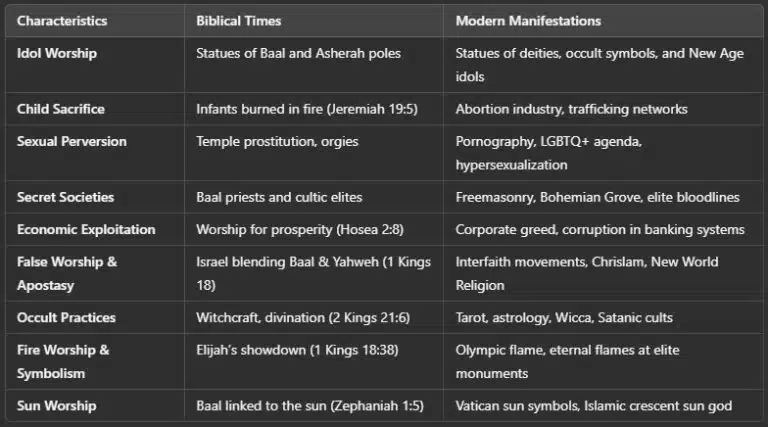
The Frequency of Baal in Scripture – A Persistent Enemy
The Bible does not casually mention Baal—it repeatedly warns against him. From the wilderness wanderings to the prophets of Israel, Baal worship is one of the most consistent threats to God’s people. It appears not just as a false religion “out there,” but as a temptation that often crept into Israel itself.
📖 Judges 2:11–12 – “And the children of Israel did evil in the sight of the LORD, and served Baalim: And they forsook the LORD God of their fathers… and followed other gods.”
🔎 The pattern is clear: whenever God’s people forgot His Word, they quickly slid into Baal worship.
How Often Baal Appears in Scripture
🩸 Over 90 direct references to Baal or Baalim (plural) appear in the Old Testament.
🩸 Found throughout Judges, Kings, Chronicles, Jeremiah, Hosea, and other books.
🩸 Often tied to national apostasy—when leaders fell, the people followed.
🩸 Always followed by judgment—drought, famine, invasion, or captivity.
📖 Jeremiah 19:5 – “They have built also the high places of Baal, to burn their sons with fire for burnt offerings unto Baal, which I commanded not…”
🔎 God never asked for such worship—these practices came from pagan corruption, not divine command.
Why the Frequency Matters
🩸 God doesn’t repeat warnings without reason. The constant presence of Baal in Scripture shows that the greatest danger to His people has always been false worship.
🩸 Israel’s downfall wasn’t usually military—it was spiritual. Once they bowed to Baal, everything else collapsed.
🩸 The prophetic warning is for us today: the same spirit that led Israel astray is at work in the last days, preparing the world for the ultimate counterfeit.
📖 Romans 15:4 – “For whatsoever things were written aforetime were written for our learning…”
🔎 The record of Baal is not ancient trivia—it’s a mirror for today’s church.
Misinterpretations of Baal Worship – Then and Now
Many today think Baal worship was simply ancient idol-worship, irrelevant to the modern world. But that’s a dangerous misunderstanding. The Bible reveals that Baal’s spirit isn’t about one culture or one time period—it’s the ongoing pattern of counterfeit worship that appears in new disguises.
📖 Ecclesiastes 1:9 – “There is no new thing under the sun.”
🔎 What appeared in Canaan reappears in Rome, in modern religions, and even in compromised Christianity.
Common Misinterpretations
🩸 “Baal worship was just bowing to statues.”
No—it was also about immorality, child sacrifice, and counterfeit authority. Today, abortion and sexual perversion carry the same spirit.
🩸 “We don’t have Baal worship today.”
Yes, we do. It’s not always called Baal—but the fingerprints (idolatry, compromise, pleasure-driven worship) remain. Prosperity gospel, ecumenism, and even cultural “Christianity” often echo Baal’s spirit.
🩸 “Baal worship doesn’t affect God’s people anymore.”
History shows otherwise. Israel’s greatest failures came when they allowed Baal worship to mix with the truth. The church is no less vulnerable today.
📖 2 Kings 17:33 – “They feared the LORD, and served their own gods…”
🔎 That’s the heart of Baal worship: a dangerous mixture of truth and error, where people claim God’s name but live by another master.
Baal Worship in the End-Time – The Final Test of Worship
Baal worship has always been about loyalty—who we recognize as Lord. In Elijah’s day, the people were torn between Yahweh and Baal. In the last days, the same choice will confront the whole world: will we worship the Creator in truth, or follow the counterfeit lordship of Babylon?
📖 Revelation 13:15 – “And cause that as many as would not worship the image of the beast should be killed.”
🔎 Just as Baal’s prophets demanded conformity, end-time powers will enforce worship of the beast and its image.
The Parallels Are Clear
🩸 Elijah vs. Baal’s prophets – A showdown on Mount Carmel over who is truly God.
🩸 The end-time remnant vs. Babylon – A final showdown where the commandments of God and the faith of Jesus (Revelation 14:12) stand against enforced worship.
📖 1 Kings 18:38–39 – “Then the fire of the LORD fell… and when all the people saw it, they fell on their faces: and they said, The LORD, he is the God.”
🔎 In both Elijah’s day and the end time, God will vindicate His truth in power—calling His people to stand firm.
The End-Time Fingerprints of Baal
🩸 False Unity in Religion – Just as Israel blended Yahweh and Baal, modern Christianity seeks unity at the cost of truth.
🩸 Moral Perversion – As Baal’s worship was tied to immorality, so the last days are marked by unrestrained sin.
🩸 Sacrifice of Children – Ancient child sacrifice is mirrored today in abortion, where millions of innocent lives are destroyed.
🩸 Economic & Political Control – Baal worship was tied to prosperity; Revelation 13 shows buying and selling controlled by allegiance to the beast.
📖 Revelation 14:7 – “Fear God, and give glory to him; for the hour of his judgment is come: and worship him that made heaven, and earth, and the sea, and the fountains of waters.”
🔎 The final call is not just to avoid Baal’s counterfeit—it is to return to the Creator, whose authority is revealed in His Word and Law.
🔥 The spirit of Baal is alive, preparing the world for the mark of the beast. The question is the same as in Elijah’s day: “How long halt ye between two opinions?” (1 Kings 18:21).
Catholicism & Baal – The Pagan Roots of False Worship
Many assume the Roman Catholic Church simply continued the pure faith of the apostles. Yet history shows it became the greatest preserver of Baal-like practices—adopting, renaming, and sanctifying pagan traditions that God had condemned.
📖 Ezekiel 8:16 – “And, behold, at the door of the temple of the LORD… about five and twenty men, with their backs toward the temple of the LORD, and their faces toward the east; and they worshipped the sun toward the east.”
🔎 Sun worship, central to Baal, was carried directly into Rome and disguised as “Christian” devotion.
1️⃣ Sun Worship & Baal’s Solar Connection
Baal was a solar deity, and sun worship was central to his religious system (Zephaniah 1:5). The Catholic Church incorporates sun imagery throughout its symbols and rituals.
View Baal Sun Worship | View Vatican Sun Worship
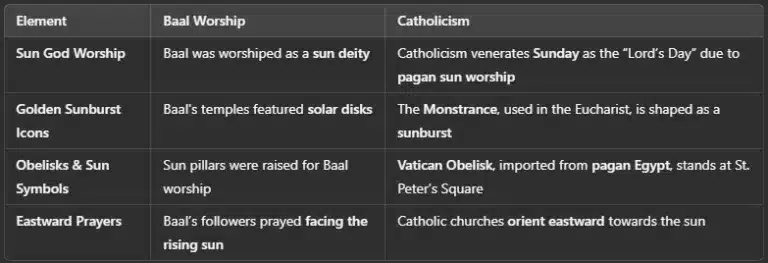
Ezekiel 8:16 describes how men faced east, worshiping the sun—a practice condemned by God, yet mirrored in Catholic tradition.
2️⃣ Queen of Heaven & Marian Worship
Baal’s consort was Asherah (Astarte/Ishtar), often referred to as the Queen of Heaven (Jeremiah 7:18). This pagan goddess was worshiped with cakes, processions, and prayers—a practice that closely resembles Marian veneration today.
View Asherah Worship | View Marian Worship
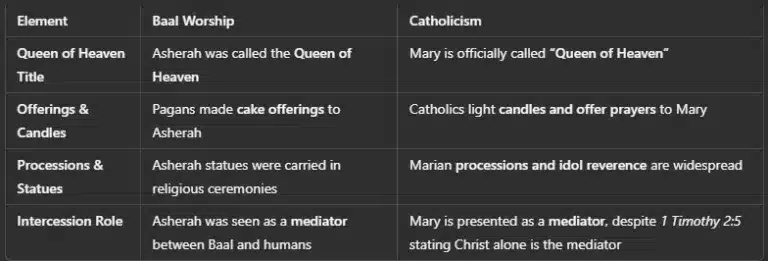
Jeremiah 44:17-19 condemns the worship of the Queen of Heaven, yet Catholicism openly exalts Mary with the same title.
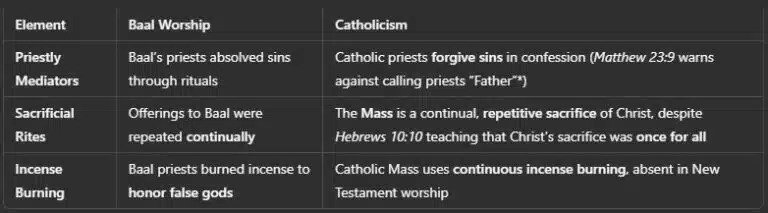
3️⃣ Priestly Rituals & Pagan Sacrifices
Baal worship involved elaborate priestly rituals, incense burning, and sacrifices. Catholicism follows a similar pattern, aligning more with paganism than biblical Christianity.
View Dagon Priest | View Catholic Priest
4️⃣ Vatican Obelisks & Baal Phallic Symbols
The Vatican Obelisk at St. Peter’s Square is an Egyptian phallic symbol once used in sun worship. Baal worship frequently involved phallic symbols as fertility representations.
View Obelisks of Baal | View Obelisks of Rome

Deuteronomy 12:30-31 warns against adopting pagan religious symbols, yet the Vatican prominently displays obelisks and solar symbols.
The Jesuits, Secret Societies, and Baal Worship
The Jesuits, one of the most powerful Catholic orders, bear many similarities to Baal’s elite priesthood. Their oaths, symbolism, and secretive nature align with occultic traditions.
Jesuit & Baal Worship Parallels
🩸 Blood Oaths & Secret Initiations – Jesuits take extreme vows, much like Baal priests did.
🩸 Sun Worship in Jesuit Logos – The Jesuit sunburst logo resembles Baal’s solar disk.
🩸 Ecumenical Movement – Jesuits lead the charge for global religious unity, which resembles Baal’s merging of faiths in ancient Israel.
While many Catholics may sincerely seek Christ, the institution itself retains numerous elements of Baal worship through sun veneration, priestly sacrifices, Marian devotion, and secret society influences.
Catholicism is not just history—it is prophecy. The same Baal patterns are alive in Rome’s doctrines and influence. And Revelation 17–18 identifies this system as Babylon, drunk with the blood of the saints, deceiving nations with false worship.
🔥 Rome’s Baal-like religion has been baptized into “Christianity,” but it is still pagan at the root. The Bible calls God’s people to discern the counterfeit and return to pure worship of Christ alone.


