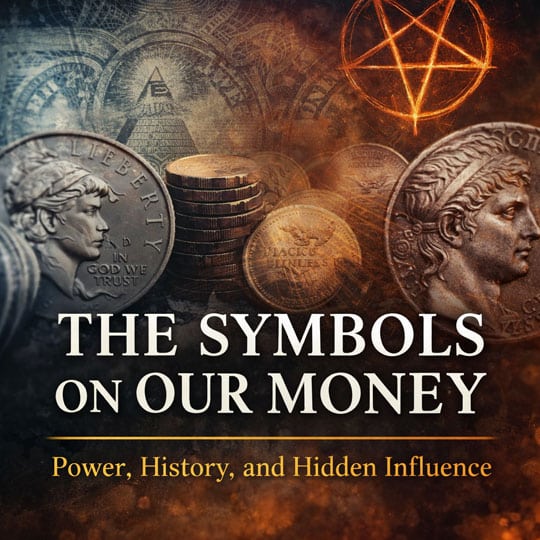
Throughout history, money has never been merely a tool for trade—it has been a carrier of identity, authority, and influence. From ancient empires to modern nations, rulers have placed images, inscriptions, and symbols on currency to communicate power and shape perception.
In ancient Rome, coins bore the likeness of emperors, reinforcing loyalty and authority across the empire. These images were not accidental—they were deliberate, reminding all who handled them whose rule they lived under.
📖 Luke 20:24 – “Shew me a penny. Whose image and superscription hath it? They answered and said, Caesar’s.”
🔎 Jesus Himself pointed to the significance of currency as a symbol of authority. The image and inscription revealed who held power. Yet even in this moment, Christ drew a deeper distinction—earthly authority may stamp its image on coins, but God alone has authority over the soul.
As we examine the symbols that appear on modern currency, we are reminded that history often repeats patterns. Imagery tied to power, identity, and even deeper philosophical ideas continues to appear, raising important questions for those willing to look closely.
📖 Ecclesiastes 1:9 – “The thing that hath been, it is that which shall be… and there is no new thing under the sun.”
🔎 What we see today is not without precedent. Systems rise, symbols evolve, and influence spreads—but the underlying principles remain the same. Throughout time, earthly powers have used imagery and messaging to establish authority and shape belief.
For those who study Scripture, this becomes more than observation—it becomes a call to discernment. The Bible warns that in the last days, systems of power will not only govern outward life but will seek influence over belief and worship itself.
📖 Revelation 13:16–17 – “And he causeth all… to receive a mark… that no man might buy or sell, save he that had the mark…”
💡 Here, the connection between commerce, authority, and worship becomes clear. The ability to buy and sell is tied to allegiance, showing that economic systems can become tools of control. What appears ordinary—coins, currency, symbols—may carry deeper meaning. For those with eyes to see, these things are not to inspire fear, but to awaken readiness and faithfulness to God.
From Rome to Today – Currency as a Tool of Authority
📖 Matthew 22:19–21 – “Shew me the tribute money… And he saith unto them, Whose is this image and superscription? They say unto him, Caesar’s. Then saith he unto them, Render therefore unto Caesar the things which are Caesar’s; and unto God the things that are God’s.”
🔎 In the time of Christ, Roman currency carried the image of Caesar, the ruler of the empire. These coins were more than economic tools—they were symbols of authority, identity, and allegiance. To use them was to live within the system of Rome.
Many of these coins even bore inscriptions that elevated the emperor to divine status, blending political power with religious influence. In this way, the economic system and the worship system were closely connected.
🔹 Currency reflected the authority of the ruling power. 🔹 Images and inscriptions reinforced identity and allegiance. 🔹 Economic participation tied individuals to the system of the empire.
📖 Daniel 7:23 – “The fourth beast shall be the fourth kingdom upon earth… and shall devour the whole earth.”
🔎 The book of Daniel describes earthly kingdoms as powerful systems that extend influence over large portions of the world. Rome, represented in prophecy, was one such system—expanding not only through military strength, but through governance, law, and cultural influence. Its reach extended into daily life, including commerce.
📖 Revelation 17:18 – “The woman which thou sawest is that great city, which reigneth over the kings of the earth.”
🔎 Revelation builds upon this pattern, showing systems of power that influence not just nations, but global structures. These systems often combine authority, wealth, and influence—shaping how people live, trade, and even think.
💡 From Rome to today, currency has consistently served as more than money—it has been a visible sign of authority and participation in a larger system.
Symbols, Power, and Perception
📖 Habakkuk 2:18–19 – “What profiteth the graven image… Woe unto him that saith to the wood, Awake…”
🔎 Throughout Scripture, God warns about the use of images and symbols that can influence perception and lead people away from truth. While not all imagery is inherently wrong, the Bible calls for discernment regarding what symbols represent and how they are used. In many societies, symbols are carefully chosen to communicate meaning:
🔹 Identity (who we are as a people). 🔹 Authority (who rules or governs). 🔹 Ideals (what is valued or believed).
When these symbols are repeated and widely distributed—such as on currency—they become part of everyday life, shaping thought in subtle ways.
📖 Psalm 20:7 – “Some trust in chariots, and some in horses: but we will remember the name of the LORD our God.”
💡 There is always a danger that people begin to place trust in systems, symbols, or structures rather than in God. What is seen daily can gradually influence what is believed. Symbols may seem small, but when tied to systems of power, they can shape perception and influence belief over time.
Commerce, Control, and the Final Warning
📖 Revelation 13:16–17 – “And he causeth all… to receive a mark… that no man might buy or sell, save he that had the mark…”
🔎 The Bible clearly teaches that in the final events of earth’s history, economic systems will play a central role. The ability to buy and sell will not be purely financial—it will be connected to allegiance and authority.
This reveals something critical: commerce can become a tool not only of trade, but of control.
🔹 Access to economic systems may be restricted. 🔹 Participation may require conformity. 🔹 Loyalty may be tested through everyday transactions.
📖 Revelation 14:9–10 – “If any man worship the beast and his image… the same shall drink of the wine of the wrath of God…”
🔎 The issue ultimately centers on worship and allegiance. While the outward system involves commerce, the deeper issue is spiritual—who is obeyed, and who is worshiped.
💡 What begins as a system of trade can become a system of testing—revealing where each person’s loyalty truly lies.
Signs on the Horizon – Currency, Leadership, and Changing Symbols
📖 Ecclesiastes 1:9 – “The thing that hath been, it is that which shall be… and there is no new thing under the sun.”
🔎 As we look at developments in our time, certain discussions and design shifts surrounding currency and leadership are drawing attention. While not all proposals become reality, they reveal patterns that are worth examining—especially when viewed through the lens of history and Scripture.
The Elevation of Leadership on Currency
📖 Luke 20:24 – “Whose image and superscription hath it? They answered and said, Caesar’s.”
🔎 In the United States, currency has long followed a consistent pattern. While presidents have appeared on coins and bills, these have historically been:
figures from the past
individuals no longer living
representatives of legacy, not current authority
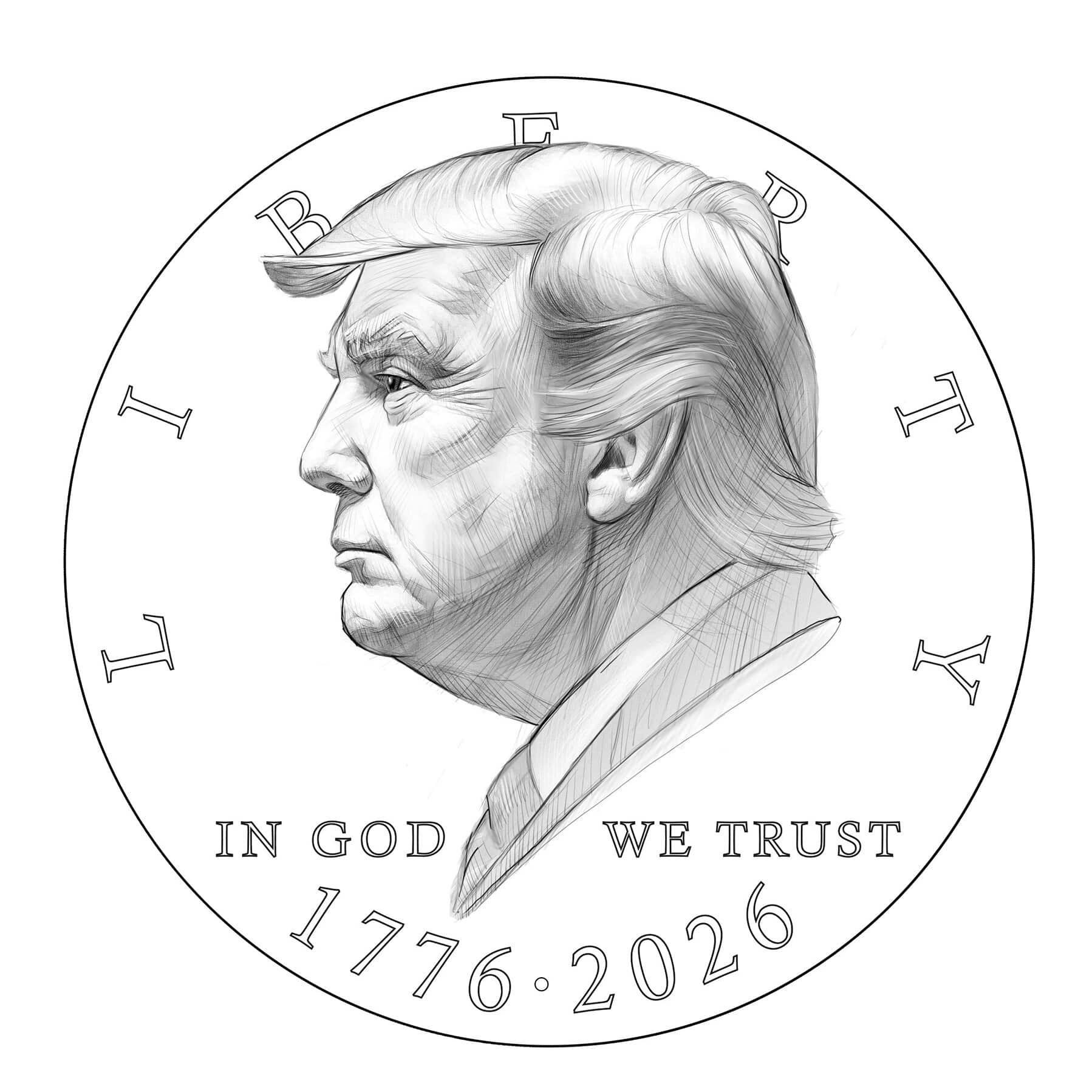
Likewise, signatures on U.S. paper currency have traditionally belonged to Treasury officials—not sitting presidents. Recent discussions and circulating proposals suggesting:
🔹 the inclusion of a sitting president’s image on currency 🔹 or the presence of a president’s signature
This represents a notable departure from historical norms. This shift is significant not because of the individual, but because of the pattern it reflects.
🔹 It mirrors systems where current authority is emphasized through imagery. 🔹 It echoes historical practices seen in empires like Rome. 🔹 It raises questions about how authority is presented and reinforced.
📖 Acts 12:21–23 – “…the people gave a shout, saying, It is the voice of a god… And immediately the angel of the Lord smote him…”
💡Scripture consistently warns about elevating human authority beyond its proper place. When leaders are exalted in ways that shape perception and loyalty, it becomes a spiritual concern—not merely a political one. The concern is not the person, but the pattern—history shows that the elevation of human authority can gradually shift where trust and allegiance are placed.
🔹 Changing Symbols – The Case of the Dime
📖 Habakkuk 2:18 – “What profiteth the graven image…?”
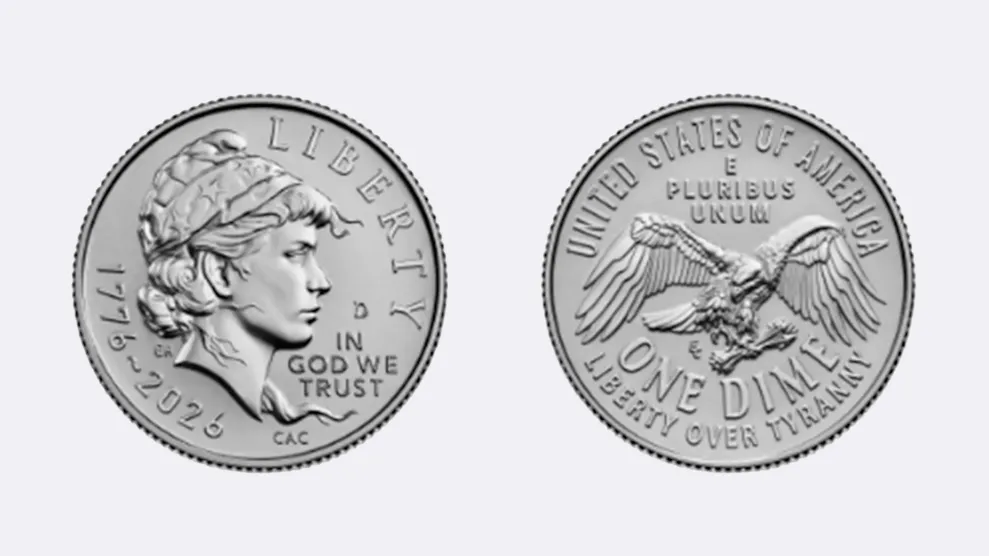
🔎 Alongside discussions of leadership imagery, there are also circulating designs and variations in currency that reflect changes in symbolic representation.
One such example is the use of a Liberty figure wearing a Phrygian-style cap—a symbol with deep historical roots. In earlier times, this cap was associated with:
🔹 freedom from bondage in ancient cultures 🔹 revolutionary movements 🔹 ideological expressions of “liberty”
While often presented as a symbol of freedom, history shows that such hat imagery has been used in a variety of contexts—representing ideals that differ from biblical truth.
The Phrygian cap, a soft conical cap with the top pulled forward, possesses a long history filled with esoteric and symbolic meanings, transitioning from an ancient religious accessory to a symbol of revolutionary liberty. Its “occult” or hidden connections are largely found in its association with ancient mystery cults, esoteric interpretations of freedom, and alleged connections to secret societies.
Ancient Occult and Mythological Ties
Mithraism: The cap is a primary feature of the Roman mystery religion of Mithraism, frequently worn by the god Mithras, as well as his helpers, Cautes and Cautopates, in “tauroctony” (bull-slaying) scenes. It symbolized the “perserie” (Pseudo-Oriental trappings) of this astrology-centric cult.
Cult of Cybele and Attis: The cap is heavily associated with Attis, the young consort of the Phrygian mother goddess Cybele, representing a cult focused on sacrifice, agriculture, and resurrection.
Esoteric Symbolism: Some interpretations view the cap as a sign of the “Enlightened” or as an emblem of a “supernatural simultaneous sacrifice and triumph”.
📖 2 Corinthians 11:14 – “Satan himself is transformed into an angel of light.”
🔎 The Bible reminds us that what appears as light or freedom is not always aligned with God’s truth. Symbols may carry layers of meaning that are not immediately visible.
In addition, variations in coin imagery—such as depictions of the eagle without traditional elements like the olive branch of peace—can reflect shifts in emphasis. Historically, the eagle holding an olive branch has symbolized peace. Its absence in certain designs raises questions about the messaging being conveyed.
🔹 Symbols communicate ideas beyond words. 🔹 Changes in imagery can reflect shifts in values or identity. 🔹 Repeated exposure shapes perception over time.
📖 Psalm 20:7 – “Some trust in chariots… but we will remember the name of the LORD our God.”
💡 As symbols evolve, the believer is called not to place trust in imagery, systems, or power structures, but in God alone. What may appear as simple design changes can serve as reminders to remain spiritually aware, discerning not just what is seen—but what it may represent.
Freedom vs True Liberty – What the Bible Says
📖 John 8:36 – “If the Son therefore shall make you free, ye shall be free indeed.”
🔎 The world often speaks of freedom—freedom of expression, freedom of choice, freedom of identity. These ideas are frequently represented through symbols, systems, and movements. Yet the Bible presents a deeper and very different understanding of what true liberty actually is.
True freedom is not found in external systems or human authority. It is found in being set free from sin, deception, and separation from God.
📖 John 8:32 – “And ye shall know the truth, and the truth shall make you free.”
🔎 According to Scripture, freedom is directly tied to truth. Without truth, what appears to be freedom can actually lead to bondage. This is why discernment is so important—what is presented as liberty is not always aligned with God’s Word.
🔸 The world defines freedom as doing what one desires. 🔹 The Bible defines freedom as living in truth and obedience. One leads to self-rule, the other to restoration with God.
📖 2 Peter 2:19 – “While they promise them liberty, they themselves are the servants of corruption…”
🔎 This warning is especially powerful. It reveals that systems, ideas, or influences can promise freedom while actually leading people into deeper bondage. Throughout history, this pattern has appeared again and again—liberty offered outwardly, while control increases beneath the surface.
📖 Galatians 5:1 – “Stand fast therefore in the liberty wherewith Christ hath made us free…”
🔎 The freedom Christ offers is not temporary or symbolic—it is spiritual, lasting, and rooted in truth. It cannot be given or taken away by governments, systems, or economic structures.
🔹 True liberty comes from Christ alone. 🔹 It cannot be controlled by earthly authority. 🔹 It remains even when outward freedoms are challenged.
📖 James 1:25 – “Whoso looketh into the perfect law of liberty… shall be blessed in his deed.”
💡 God’s law is described as a “law of liberty,” showing that obedience to truth does not bring bondage—it brings freedom. This stands in contrast to the idea that freedom is found in rejecting God’s authority. The greatest deception is not open control—it is convincing people they are free while leading them away from truth.
Final Reflection – A Call to Discernment and Readiness
📖 1 Thessalonians 5:5–6 – “Ye are all the children of light… Therefore let us not sleep, as do others; but let us watch and be sober.”
🔎 The purpose of studying these things is not fear, but awareness. God calls His people to be watchful—to understand the times and to remain grounded in truth.
📖 Romans 13:11 – “Now it is high time to awake out of sleep: for now is our salvation nearer than when we believed.”
🔎 As events unfold and systems continue to develop, the call of Scripture becomes more urgent. The signs are not meant to alarm, but to awaken.
📌 Do I understand where true authority belongs? 📌 Am I placing trust in systems, or in God? 📌 Am I spiritually prepared for what Scripture warns is coming?
💡 The world may be shaped by systems of power—but God’s people are called to stand in truth.
📖 Revelation 18:4 – “Come out of her, my people, that ye be not partakers of her sins…”
✝️ The call is clear—discern, prepare, and remain faithful to God above all earthly systems.
Throughout history, the union of religion and government has often led to one dangerous outcome: the loss of freedom of conscience. While civil authorities are...
News Context – The Claim Being Discussed Recent Claim in the News: https://cbn.com/news/politics/ted-cruz-warns-rising-antisemitism-inside-church-says-tucker-carlson-targeting In a recent public discussion, Senator Ted Cruz responded to the phrase...