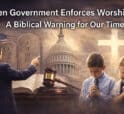

The Sunday Rest Movement – Preparing the World for Forced Worship?
Throughout history, societies have periodically called for a national day of rest. These appeals are often presented as beneficial for families, workers, and cultural unity. Yet for students of Scripture, the growing discussion surrounding Sunday rest raises deeper questions about religion, government authority, and the freedom of worship.
The Bible repeatedly warns that in the last days, worship will become a central issue. What may begin as social policy or cultural tradition can eventually evolve into something far more serious when civil authority begins regulating religious practice.
📖 Revelation 13:16–17 – “And he causeth all, both small and great, rich and poor, free and bond, to receive a mark… and that no man might buy or sell, save he that had the mark.”
This prophecy describes a future system where economic and governmental pressure influence matters of worship and allegiance. While such a system may appear distant, the growing conversations about mandated rest days invite thoughtful reflection on how easily civil law and religious tradition can become intertwined.
As history has shown, what begins as a day of rest can quickly become a test of loyalty and obedience.
The First Sunday Law in History
Long before modern discussions about national rest days, history records the first time civil authority officially elevated Sunday through law. In 321 AD, the Roman emperor Constantine the Great issued a decree requiring rest on “the venerable day of the Sun.”
The decree stated:
“On the venerable Day of the Sun let the magistrates and people residing in cities rest, and let all workshops be closed.”
This law did not originate from the commandments of God recorded in Scripture. The Bible identifies the seventh day—the Sabbath—as the day blessed and sanctified by God.
📖 Genesis 2:2–3 – “And on the seventh day God ended his work which he had made; and he rested on the seventh day from all his work which he had made. And God blessed the seventh day, and sanctified it.”
Yet over time, the combination of religious tradition and political authority led to the elevation of Sunday within the Roman Empire. What began as a civil decree gradually shaped religious practice across large portions of the Christian world.
The Bible warns that earthly powers would attempt to alter God’s appointed times and laws.
📖 Daniel 7:25 – “And he shall speak great words against the most High, and shall wear out the saints of the most High, and think to change times and laws.”
For many students of prophecy, this historical shift is significant. It demonstrates how easily civil power and religious tradition can merge, influencing how societies worship and observe sacred time.
The question that remains for our generation is whether similar patterns could appear again.
When Civil Law Begins to Regulate Worship
History shows that the most dangerous moments for freedom of conscience occur when civil authority begins enforcing religious practices. What may begin as a social policy or cultural tradition can slowly evolve into laws that influence how and when people worship.
The Bible repeatedly warns that such conditions will appear again before the return of Christ. In the final conflict described in prophecy, the issue is not simply politics or economics—it is worship and allegiance.
📖 Revelation 13:15 – “And he had power to give life unto the image of the beast, that the image of the beast should both speak, and cause that as many as would not worship the image of the beast should be killed.”
This passage reveals a system where authority is used to enforce worship. While the exact form this system will take is debated among Christians, the principle is clear: human authority attempting to control what belongs to God alone.
Scripture provides earlier examples of this pattern. In ancient Babylon, rulers were commanded to bow before the golden image erected by Nebuchadnezzar II.
📖 Daniel 3:5 – “That at what time ye hear the sound of the cornet, flute, harp, sackbut, psaltery, dulcimer, and all kinds of musick, ye fall down and worship the golden image that Nebuchadnezzar the king hath set up.”
The lesson of Babylon is clear. When governments begin to regulate worship, believers are often placed in a difficult position—choosing between obedience to earthly authority or faithfulness to God.
For this reason, the growing discussions surrounding national days of rest or religious observance invite careful reflection. What may appear harmless at first can eventually raise profound questions about freedom of conscience and the authority of God’s commandments.
Watching the Signs of Our Time
Across the world, conversations about a weekly day of rest are becoming increasingly common. Advocates often present these ideas as beneficial for workers, families, the environment, or social unity. In many ways, these arguments can appear reasonable and even compassionate.
Yet students of prophecy recognize that Scripture warned of a time when religious influence and civil authority would again unite.
📖 Revelation 13:7 – “And power was given him over all kindreds, and tongues, and nations.”
This prophecy describes a system that ultimately reaches global influence, affecting nations and peoples across the world. What begins in one nation can quickly spread as other governments adopt similar policies.
Because of this, thoughtful Christians watch developments carefully—not with fear, but with spiritual awareness. History has shown that when political power and religious authority merge, freedom of conscience can slowly erode.
For this reason, discussions about national rest laws invite reflection on the deeper biblical principle: who ultimately holds authority over worship—God or man?
The Final Test of Allegiance
The Bible reveals that the final conflict in human history will center on worship and obedience. Throughout Scripture, this theme appears again and again.
🔹 Cain and Abel revealed two approaches to worship—obedience to God versus human preference.
🔹 Babylon’s golden image tested whether people would bow to human authority.
🔹 The early Christians faced persecution for refusing to worship the Roman emperor.
🔹 Revelation describes a final crisis where allegiance to God is again tested.
In that final moment, Scripture describes a faithful people who remain loyal to God regardless of pressure or persecution.
📖 Revelation 14:12 – “Here is the patience of the saints: here are they that keep the commandments of God, and the faith of Jesus.”
These believers are not defined by political power or social influence. They are defined by their faithfulness—trusting Christ and honoring the commandments of God even when the world moves in another direction.
The warnings of prophecy are not given to frighten us, but to prepare us. They remind us that while kingdoms rise and fall, God’s truth remains unchanged.
As our world continues to move toward greater unity of power, culture, and influence, every generation must answer the same question:
Will we follow the traditions of men, or remain faithful to the commandments of God and the faith of Jesus?
📖 Joshua 24:15 –
And if it seem evil unto you to serve the LORD, choose you this day whom ye will serve; whether the gods which your fathers served… or the gods of the Amorites… but as for me and my house, we will serve the LORD.