
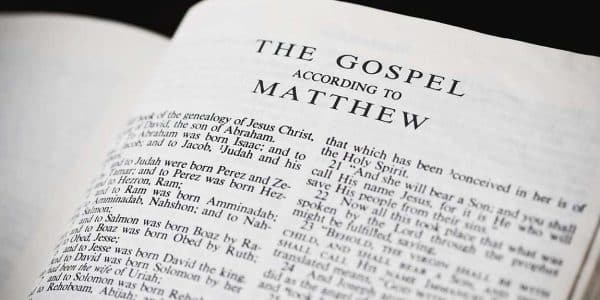
Matthew 1 – The Genealogy and Birth of the King
Matthew 1 establishes Jesus Christ as the rightful heir to the throne of David, fulfilling Old Testament prophecy. This chapter details His genealogy, virgin birth, and divine purpose, setting the stage for the fulfillment of God’s redemptive plan.
The King’s Lineage and Birth – A Divine Fulfillment
Matthew 1 introduces Jesus Christ as the legal and prophetic heir to the throne of David. This chapter establishes His Messianic identity through genealogy and the miraculous virgin birth. The significance of this chapter lies in how it bridges the Old Testament prophecies with the New Testament revelation of Jesus Christ.
✔ Proves Jesus as the rightful heir to David’s throne.
✔ Highlights God’s sovereignty in using imperfect people for His divine plan.
✔ Emphasizes the supernatural nature of Jesus’ birth.
✔ Fulfills Old Testament prophecy concerning the coming of the Messiah.
📖 Key Verse: “And she shall bring forth a son, and thou shalt call his name JESUS: for he shall save his people from their sins.” – Matthew 1:21
🔎 Matthew’s genealogy and birth account affirm that Jesus is both the divine and legal fulfillment of God’s promises.
Matthew 1:1-17 – The Genealogy of Jesus
📖 Matthew 1:1 – “The book of the generation of Jesus Christ, the son of David, the son of Abraham.”
🔎 Matthew begins with a genealogy, proving Jesus’ legal right to the throne of David. By tracing His lineage through Abraham and David, Matthew establishes that Jesus is the promised Messiah who fulfills God’s covenant with Israel.
📖 Matthew 1:6 – “And Jesse begat David the king; and David the king begat Solomon of her that had been the wife of Urias.”
🔎 Jesus’ lineage includes both kings and sinners, demonstrating God’s grace. Even those who failed (David’s sin with Bathsheba) were used in the Messiah’s ancestry.
📖 Matthew 1:16 – “And Jacob begat Joseph the husband of Mary, of whom was born Jesus, who is called Christ.”
🔎 Unlike the other names, Jesus is not said to be ‘begotten’ by Joseph. This signals the miraculous virgin birth, separating Christ from earthly lineage while affirming His royal claim.
Matthew 1:18-25 – The Birth of Jesus Christ
📖 Matthew 1:18 – “Now the birth of Jesus Christ was on this wise: When as his mother Mary was espoused to Joseph, before they came together, she was found with child of the Holy Ghost.”
🔎 Jesus’ birth was supernatural, not by human means. The Holy Spirit overshadowed Mary, fulfilling Isaiah’s prophecy (Isaiah 7:14).
📖 Matthew 1:21 – “And she shall bring forth a son, and thou shalt call his name JESUS: for he shall save his people from their sins.”
🔎 The name ‘Jesus’ (Yeshua) means ‘Salvation.’ His very name declares His purpose—to save mankind from sin.
📖 Matthew 1:23 – “Behold, a virgin shall be with child, and shall bring forth a son, and they shall call his name Emmanuel, which being interpreted is, God with us.”
🔎 Jesus is ‘God with us’—the incarnate presence of God dwelling among men, fulfilling Isaiah 7:14.
📖 Matthew 1:25 – “And knew her not till she had brought forth her firstborn son: and he called his name JESUS.”
🔎 Joseph obeyed the angel’s command, signifying his faith. Jesus was born of a virgin, fulfilling God’s divine plan of redemption.
Overview: The Arrival of the Messiah, The Fulfillment of Prophecy
🔹 Timeframe: The genealogy and birth of Jesus Christ.
🔹 Setting: Israel, under Roman occupation, with Jesus’ birth in Bethlehem.
🔹 Theme: Fulfillment of prophecy, divine intervention, and the establishment of the Messianic promise.
Matthew 1 lays the foundation for Jesus’ Messianic identity and divine nature. From the genealogy proving His legal kingship to His supernatural birth, this chapter presents Him as the fulfillment of prophecy and the Savior of the world.
Key Takeaways
🔑 Jesus is the rightful heir to the throne of David.
🔑 God’s plan of redemption includes both the righteous and the fallen.
🔑 The virgin birth signifies divine intervention in human history.
🔑 Jesus’ name reflects His purpose: salvation.
Prophetic Patterns & Dual Fulfillment
🔮 Jesus as the ‘Son of David’ – Fulfilling the promise of an everlasting kingdom (2 Samuel 7:12-13).
🔮 Born of a Virgin – Prophesied in Isaiah 7:14, fulfilled in Matthew 1.
🔮 Emmanuel – ‘God with Us’ – Foretold in prophecy, realized in Christ’s incarnation.
Historical & Cultural Context
📜 Jewish Genealogies – Essential for proving one’s legitimacy to rule.
📜 Betrothal in Jewish Culture – A binding engagement, requiring divorce to dissolve.
📜 Roman-Occupied Israel – The Jews were longing for their prophesied Messiah.
Final Reflection: The Promise Fulfilled
Matthew 1 is not just a record of names or events—it is the declaration of God’s faithfulness. From Abraham to David, from exile to restoration, every detail points to God’s sovereign plan in bringing forth the Messiah.
📌 Do we recognize Jesus as the fulfillment of God’s promises?
📌 Are we willing to trust His divine plan, even when it defies human logic?
📌 How does the truth of ‘God with us’ impact our daily lives?
🚀 The King has arrived—His Kingdom is near! Will we receive Him?