
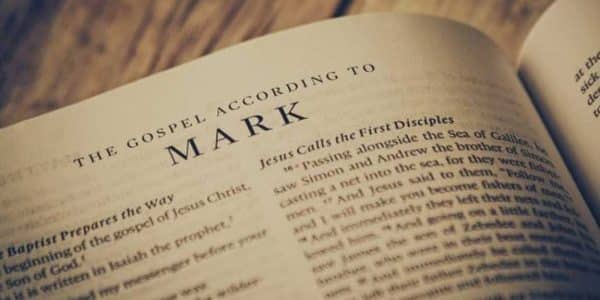
Mark 2 – Authority, Forgiveness, and the New Way
Mark 2 highlights Jesus’ authority to forgive sins, His interactions with sinners, and His teachings on the Sabbath. This chapter challenges religious traditions and reveals the transformative power of faith in Christ.
Jesus’ Authority Over Sin and Tradition
In Mark 2, Jesus openly challenges the religious elite by displaying divine authority over sin, tradition, and human expectations.
✔ Jesus forgives and heals a paralytic, proving His authority.
✔ He calls Levi (Matthew) and dines with sinners.
✔ He is questioned about fasting and the old wineskin analogy.
✔ Jesus declares Himself Lord of the Sabbath.
📖 Key Verse: “But that ye may know that the Son of man hath power on earth to forgive sins…” – Mark 2:10
🔎 Jesus demonstrates that faith in Him leads to transformation, not religious formalism.
Mark 2:1-12 – Jesus Forgives and Heals the Paralytic
📖 Mark 2:4 – “And when they could not come nigh unto him for the press, they uncovered the roof where he was… and let down the bed wherein the sick of the palsy lay.”
🔎 The friends of the paralytic display persistent faith, refusing to be hindered by obstacles.
📖 Mark 2:5 – “When Jesus saw their faith, he said unto the sick of the palsy, Son, thy sins be forgiven thee.”
🔎 Jesus first addresses sin rather than physical healing, revealing that spiritual restoration is the greater need.
📖 Mark 2:7 – “Why doth this man thus speak blasphemies? who can forgive sins but God only?”
🔎 The scribes unknowingly affirm Christ’s deity—only God can forgive sins, and Jesus proves He is God in the flesh.
📖 Mark 2:11-12 – “I say unto thee, Arise, and take up thy bed, and go thy way into thine house.”
🔎 Jesus authenticates His authority through miraculous healing, demonstrating that His power over sin is real.
Mark 2:13-17 – The Calling of Levi and Dining with Sinners
📖 Mark 2:14 – “And as he passed by, he saw Levi the son of Alphaeus sitting at the receipt of custom, and said unto him, Follow me. And he arose and followed him.”
🔎 Jesus calls an unlikely disciple—Levi (Matthew), a tax collector despised by society.
📖 Mark 2:16 – “How is it that he eateth and drinketh with publicans and sinners?”
🔎 The religious leaders are scandalized by Jesus’ grace—He associates with outcasts.
📖 Mark 2:17 – “I came not to call the righteous, but sinners to repentance.”
🔎 Jesus’ mission is to rescue those who recognize their need for salvation.
Mark 2:18-22 – The Question About Fasting and the New Wineskin
📖 Mark 2:19 – “Can the children of the bridechamber fast, while the bridegroom is with them?”
🔎 Jesus likens Himself to a bridegroom—His presence is a time of joy, not mourning.
📖 Mark 2:21-22 – “No man also seweth a piece of new cloth on an old garment… And no man putteth new wine into old bottles.”
🔎 Jesus introduces a new covenant—the old legalistic ways cannot contain the life and power of His message.
Mark 2:23-28 – Lord of the Sabbath
📖 Mark 2:24 – “Why do they on the sabbath day that which is not lawful?”
🔎 The Pharisees impose strict Sabbath laws, missing the true purpose of rest.
📖 Mark 2:27 – “The sabbath was made for man, and not man for the sabbath.”
🔎 The Sabbath was a gift, not a burden—Jesus restores its original intent.
📖 Mark 2:28 – “Therefore the Son of man is Lord also of the sabbath.”
🔎 Jesus declares His authority over the Sabbath, challenging religious legalism.
Overview: A New Way Through Christ
🔹 Timeframe: Early days of Jesus’ ministry in Galilee.
🔹 Setting: Capernaum and surrounding regions.
🔹 Theme: Jesus redefines faith, forgiveness, and religious traditions.
Mosaic Law vs. God’s Law
📜 The Mosaic Law (Ceremonial Law) – These were laws given through Moses that included sacrificial systems, temple ordinances, dietary restrictions, and festivals. They were temporary laws tied to the Old Covenant and pointed forward to Christ’s fulfillment (Colossians 2:14).
📜 The Ten Commandments (Moral Law) – These were spoken directly by God (Exodus 20) and written by His own hand on stone (Exodus 31:18), symbolizing their permanence. They reflect God’s unchanging character and remain in effect (Matthew 5:17-19).
📜 Jeremiah 31:31-34 – The New Covenant Clarified
🔹 The ‘Old Covenant’ refers to the Mosaic laws of sacrifices, priesthood, and temple ordinances. It was conditional upon Israel’s obedience.
🔹 God’s law remains but is now internal—written on the heart, not abolished.
🔹 Hebrews 8:10 confirms this by restating Jeremiah: ‘I will put my laws into their mind, and write them in their hearts.’
📜 Key Difference
🔹 Mosaic Law (Sacrificial, Priestly, Temple Laws) → Abolished in Christ (Colossians 2:14).
🔹 Moral Law (Ten Commandments, reflecting God’s character) → Written on the heart (Hebrews 8:10).
📌 Final Clarity: The New Covenant replaces the Mosaic system, not God’s moral law.
Key Takeaways
🔑 Faith requires persistence—like the friends who lowered the paralytic through the roof.
🔑 Jesus came to call sinners, not the self-righteous.
🔑 The new covenant cannot be contained by old legalistic traditions.
🔑 Jesus is Lord of the Sabbath, restoring its true meaning.
Prophetic Patterns & Dual Fulfillment
🔮 Healing as a Sign of the Messiah – Fulfillment of Isaiah 35:5-6.
🔮 The New Covenant Foretold – Jeremiah 31:31 prophesied a new covenant not based on the old law. (Mosaic Law)
🔮 The Messianic Banquet – Isaiah 25:6 foreshadows Jesus dining with sinners as part of His redemptive work.
Historical & Cultural Context
📜 Tax Collectors and Social Rejection – Levi’s profession made him an outcast, yet Jesus saw his potential.
📜 Pharisaic Sabbath Laws – The Pharisees had rigid interpretations of Sabbath laws, which Jesus corrected.
📜 Old Wineskins and Jewish Tradition – The Jewish leaders resisted change, but Jesus brought a new way of faith.
Final Reflection: Religion vs. Relationship
Mark 2 challenges us to move beyond legalism and embrace the living, transformational faith in Christ.
📌 Do we persist in faith like the paralytic’s friends?
📌 Are we willing to follow Christ, even when it defies expectations?
📌 Do we rest in the freedom Jesus brings, or cling to old ways?
🚀 Jesus didn’t come to patch up old religion—He came to make all things new!