
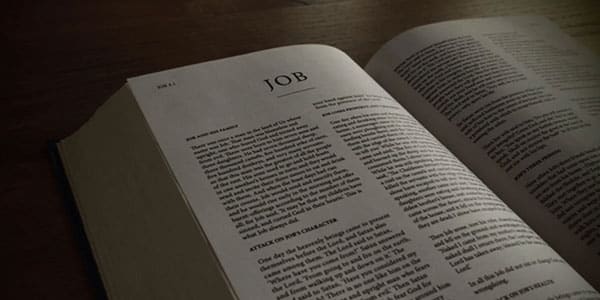
In Job Chapter 32, the debate between Job and his three friends comes to an end—and a new speaker emerges. Elihu, a younger man who has been listening silently, now steps forward with strong emotion and conviction. He is angry—angry at Job for justifying himself rather than God, and angry at Job’s friends for failing to provide a true answer. Unlike the others, Elihu believes he has something deeper to say.
This chapter marks a turning point. The old arguments have run their course, and now a new perspective is introduced—one that prepares the way for what is to come. Elihu represents something important: the recognition that both sides have spoken, yet something is still missing.
A Voice That Could Not Stay Silent
✔ Elihu has listened patiently before speaking.
✔ He is younger, yet confident in his perspective.
✔ He is angered by both Job and his friends.
✔ He believes truth has not yet been fully spoken.
✔ He speaks from conviction, not hesitation.
✔ He introduces a new direction in the discussion.
✔ His words prepare the way for deeper revelation.
📖 Job 32:8 – “But there is a spirit in man: and the inspiration of the Almighty giveth them understanding.”
🔎 Elihu points to divine inspiration as the source of true understanding, not age or experience alone.
Job 32:1–5 – The Failure of the Previous Arguments
📖 Job 32:1 – “So these three men ceased to answer Job, because he was righteous in his own eyes.”
🔎 The silence of Job’s friends reveals the collapse of their arguments, showing that rigid reasoning without discernment eventually runs out of answers when confronted with truth that does not fit their system.
📖 Job 32:2 – “Then was kindled the wrath of Elihu… against Job… because he justified himself rather than God.”
🔎 Elihu perceives that Job, though sincere, has shifted focus toward defending himself, revealing how even in suffering the heart can drift from trusting God’s righteousness to preserving personal justification.
📖 Job 32:3 – “Also against his three friends was his wrath kindled…”
🔎 Elihu is angered by their failure to answer rightly, showing that speaking wrongly about God—even with good intentions—misrepresents truth and causes greater harm.
📖 Job 32:4–5 – “Now Elihu had waited till Job had spoken…”
🔎 Elihu’s restraint reveals that true discernment listens fully before responding, showing wisdom that does not rush to speak prematurely.
Job 32:6–10 – Wisdom Is Not Bound to Age
📖 Job 32:6 – “I am young, and ye are very old…”
🔎 Elihu approaches with humility, acknowledging position while preparing to speak truth, showing that respect does not require silence when truth is lacking.
📖 Job 32:7 – “Days should speak, and multitude of years should teach wisdom.”
🔎 Elihu expresses the expectation that experience brings wisdom, revealing the common belief he is about to challenge.
📖 Job 32:8 – “But there is a spirit in man: and the inspiration of the Almighty giveth them understanding.”
🔎 Elihu reveals that true wisdom comes from God, not merely time or experience, showing that understanding is ultimately spiritual, not just intellectual.
📖 Job 32:9–10 – “Great men are not always wise…”
🔎 Elihu dismantles the assumption that status equals truth, revealing that authority without discernment can still lead to error.
Job 32:11–14 – Listening Before Speaking
📖 Job 32:11 – “Behold, I waited for your words…”
🔎 Elihu demonstrates patience, showing that wisdom gives space for others to speak before forming conclusions.
📖 Job 32:12 – “Yea, I attended unto you…”
🔎 He listened with intention, revealing that discernment requires more than hearing—it requires understanding.
📖 Job 32:13 – “Lest ye should say, We have found out wisdom…”
🔎 Elihu warns against false confidence, showing that claiming wisdom without truth leads to deception.
📖 Job 32:14 – “Now he hath not directed his words against me…”
🔎 Elihu positions himself outside the argument, preparing to bring a perspective not shaped by the same assumptions.
Job 32:15–22 – Compelled to Speak
📖 Job 32:15 – “They were amazed, they answered no more…”
🔎 The silence of the others marks the end of human reasoning, showing that the debate has reached its limit.
📖 Job 32:16–17 – “When I had waited… I will answer also my part…”
🔎 Elihu recognizes the moment to speak, revealing that discernment includes knowing when silence must give way to truth.
📖 Job 32:18 – “For I am full of matter…”
🔎 Elihu feels compelled to speak, showing that truth carried within creates a pressure that seeks expression.
📖 Job 32:19 – “My belly is as wine which hath no vent…”
🔎 The imagery reveals internal pressure, showing that truth held too long becomes a burden that must be released.
📖 Job 32:20 – “I will speak, that I may be refreshed…”
🔎 Speaking truth brings relief, revealing that silence can become heavy when truth is withheld.
📖 Job 32:21–22 – “Let me not… accept any man’s person…”
🔎 Elihu commits to impartiality, showing that true discernment refuses to be influenced by status, fear, or favor.
Overview: When a New Perspective Emerges
🔹 Timeframe: After the silence of Job’s three friends.
🔹 Setting: A pause before a new voice enters the discussion.
🔹 Theme: True understanding comes from God, not position or age.
🔹 Connection to Christ: Truth is revealed by God, not human authority (Matthew 11:25).
Living the Message – Listening Before Speaking
Job Chapter 32 teaches us that wisdom is not only found in what we say, but in how we listen. Elihu remained silent while others spoke, not because he lacked something to say, but because he understood the value of hearing fully before responding. His patience reveals that true discernment begins with careful attention, not immediate reaction.
Listening requires humility. It means setting aside the desire to respond quickly and choosing instead to understand deeply. When we rush to speak, we often respond to our assumptions rather than the truth. But when we take time to listen, we begin to see what others are actually saying, what they may be missing, and what God may be revealing through the situation.
This chapter shows that many errors come not from a lack of knowledge, but from speaking too soon. Job’s friends spoke confidently, yet wrongly, because they were more focused on defending their understanding than seeking clarity. Elihu, in contrast, waited—observed—processed—and then spoke.
Listening also creates space for wisdom to grow. It allows time for reflection, for discernment, and for truth to settle before it is expressed. It guards us from reacting emotionally and helps ensure that when we do speak, our words carry weight, clarity, and purpose.
To live this message is to slow down, to hear fully, and to speak carefully. It is to value understanding over being heard, and truth over winning a point.
🔹 Listening reveals what quick responses often miss.
🔹 Patience allows truth to become clearer.
🔹 Humility keeps us from speaking beyond our understanding.
🔹 Careful listening leads to more accurate and meaningful words.
🔹 Speaking at the right time is as important as speaking the right thing.
🔹 Discernment grows when we choose to listen first.
🔥 Wisdom is not proven by how quickly we speak—but by how well we understand before we do. When we learn to listen fully, our words carry greater truth, greater clarity, and greater impact.
Key Takeaways
🔑 Silence can reveal the limits of human reasoning.
🔑 Truth is not bound to age or position.
🔑 Listening is essential to discernment.
🔑 Speaking truth requires courage.
🔑 Incomplete understanding leads to frustration.
🔑 God is the source of true wisdom.
Prophetic Patterns & Dual Fulfillment
🔮 New Voice → Prophetic Insight
God often raises unexpected voices (Amos 7:14–15).
🔮 Spirit Gives Understanding → Holy Spirit
Truth is revealed by God’s Spirit (John 16:13).
🔮 Silence Before Revelation → God Speaks Next
After Elihu, God Himself speaks (Job 38).
Final Reflection: When It Is Time to Speak
Job Chapter 32 reminds us that there is a time to listen—and a time to speak. Elihu waited until others were finished before stepping forward. This chapter challenges us to consider how we approach truth.
📖 Job 32:8 – “The inspiration of the Almighty giveth understanding.”
🔎 True understanding comes from God, not just experience.
📌 Do you listen fully before speaking?
📌 Are you seeking truth—or defending a position?
📌 Do you speak with humility or assumption?
📌 Are your words guided by God or by emotion?
Deeper Truth: When Human Wisdom Reaches Its Limit
Job Chapter 32 reveals a critical turning point—human reasoning has reached its limit. The debate has produced words, arguments, and conclusions, but not truth.
🔥 This reveals the deeper reality:
➡ Arguments were made
➡ Logic was applied
➡ Confidence was present
…but
➡ Truth was still incomplete
Elihu steps in not because he is older or more experienced, but because he recognizes that something deeper is needed—something beyond human reasoning.
🔹 Human wisdom has limits.
🔹 Truth cannot be reached by argument alone.
🔹 God is the source of true understanding.
🔹 Discernment requires dependence on God.
🔥 Discernment recognizes when human reasoning is no longer enough. When human wisdom reaches its limit—God’s revelation begins.

