
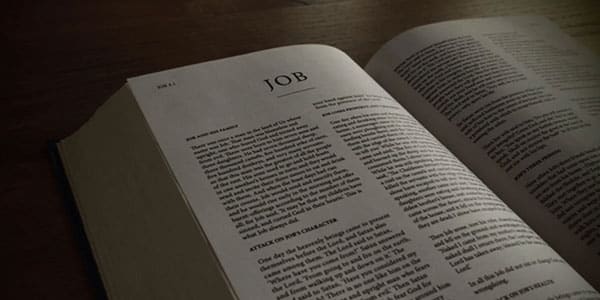
In Job Chapter 26, Job responds to Bildad—but not with anger or defense. Instead, he elevates the conversation by revealing a far greater understanding of God’s power, wisdom, and creation. Job shows that while his friends speak of God’s greatness, they only touch the surface. He describes God’s authority over the unseen world, the heavens, the earth, and the forces of nature.
Yet even after describing these incredible truths, Job concludes with something profound—what we understand of God is only a small portion of His full power. This chapter reveals a humbling truth: no matter how much we know about God, there is infinitely more beyond our understanding.
The Greatness of God Beyond Explanation
✔ Job challenges his friends’ shallow understanding.
✔ He describes God’s power over the unseen realm.
✔ He reveals God’s control over creation.
✔ He highlights God’s authority over chaos and order.
✔ He shows the vastness of God’s wisdom.
✔ He acknowledges the limits of human understanding.
✔ God’s greatness extends beyond what we can comprehend.
📖 Job 26:14 – “Lo, these are parts of his ways: but how little a portion is heard of him?”
🔎 Job declares that everything we know of God is only a fraction of His true power and nature.
Job 26:1–4 – The Failure of Shallow Wisdom
📖 Job 26:2 – “How hast thou helped him that is without power?”
🔎 Job exposes that his friends’ words have offered no real help, revealing that truth without depth or compassion cannot strengthen the suffering.
📖 Job 26:3 – “How hast thou counselled him that hath no wisdom?”
🔎 Job challenges their assumed wisdom, showing that repeating ideas without understanding does not equal true insight.
📖 Job 26:4 – “To whom hast thou uttered words?”
🔎 Job questions the source of their understanding, revealing that not all confident speech is rooted in true knowledge.
Job 26:5–7 – God’s Power Over the Unseen and the Earth
📖 Job 26:5 – “Dead things are formed from under the waters…”
🔎 Job points to the unseen realm beneath the earth, showing that God’s authority extends beyond the visible world into the depths of existence.
📖 Job 26:6 – “Hell is naked before him…”
🔎 Nothing is hidden from God—not even the realm of the dead—revealing His complete and unrestricted awareness.
📖 Job 26:7 – “He stretcheth out the north over the empty place, and hangeth the earth upon nothing.”
🔎 Job describes the earth suspended in space, revealing a profound understanding that God upholds creation without visible support.
Job 26:8–13 – God’s Authority Over Creation and Chaos
📖 Job 26:8 – “He bindeth up the waters in his thick clouds…”
🔎 God controls natural forces with precision, showing that even powerful elements operate under His command.
📖 Job 26:9 – “He holdeth back the face of his throne…”
🔎 God veils His full glory, revealing that His presence is intentionally hidden from human sight.
📖 Job 26:10 – “He hath compassed the waters with bounds…”
🔎 God establishes boundaries in creation, showing order within what appears chaotic.
📖 Job 26:11 – “The pillars of heaven tremble…”
🔎 Creation responds to God’s power, revealing that all things are sustained and affected by Him.
📖 Job 26:12 – “He divideth the sea with his power…”
🔎 God rules over chaos, showing His authority to bring order out of disorder.
📖 Job 26:13 – “By his spirit he hath garnished the heavens…”
🔎 God’s Spirit brings beauty and structure to creation, revealing both power and artistry.
Job 26:14 – The Limits of Human Understanding
📖 Job 26:14 – “Lo, these are parts of his ways…”
🔎 Job concludes that everything described is only a glimpse, revealing that human understanding barely scratches the surface of God’s true power.
Overview: The Infinite Nature of God
🔹 Timeframe: Job’s response as the debate shifts toward deeper revelation.
🔹 Setting: Job moves from defense to declaration of God’s greatness.
🔹 Theme: God’s power is vast, and human understanding is limited.
🔹 Connection to Christ: Christ reveals the fullness of God (Colossians 2:9).
Living the Message – Humility Before the Greatness of God
Job Chapter 26 invites us to step back and recognize how small our understanding truly is compared to the greatness of God. Job speaks of creation, the unseen world, and the power of God over all things—yet even after describing these wonders, he admits that what he has said is only a small glimpse.
This realization produces humility.
True humility does not come from knowing less—it comes from realizing how much more there is to know. The more clearly we see God’s power, wisdom, and authority, the less confident we become in our own limited understanding. What once felt certain begins to feel incomplete. What once seemed clear reveals deeper layers we had not considered.
This is where wisdom begins.
Humility keeps us from speaking too quickly, judging too harshly, and assuming too much. It reminds us that even when we understand something correctly, we may not understand it fully. It allows us to hold truth firmly while still leaving room for God to reveal more.
Job’s friends lacked this humility. They spoke as though they fully understood God’s ways, yet their conclusions were flawed. Job, however, after describing profound truths, steps back and says in essence—this is only a portion.
That is the posture of true wisdom.
To live this message is to approach God with reverence, not assumption. It is to seek understanding without claiming mastery. It is to recognize that God’s ways extend far beyond our ability to fully grasp them.
🔹 The more we understand God, the more we realize how much we do not understand.
🔹 Humility protects us from misusing truth.
🔹 True wisdom does not rush to conclude—it remains open to deeper understanding.
🔹 God’s greatness invites reverence, not overconfidence.
🔹 Our role is not to master truth—but to walk faithfully within it.
🔥 Humility is not weakness—it is the proper response to the greatness of God. When we truly see God as He is, pride fades—and reverence takes its place.
Key Takeaways
🔑 God’s power extends beyond what we can see.
🔑 Creation reflects God’s authority and wisdom.
🔑 The unseen realm is fully known by God.
🔑 Human understanding is limited.
🔑 True wisdom leads to humility.
🔑 God’s greatness is beyond full comprehension.
Prophetic Patterns & Dual Fulfillment
🔮 Creation Sustained → Christ’s Authority
Christ upholds all things (Colossians 1:17).
🔮 Power Over Chaos → Christ Calms the Sea
Jesus demonstrates authority over nature (Mark 4:39).
🔮 Hidden Glory → Christ Revealed
God’s fullness is revealed through Christ (John 1:18).
Final Reflection: Standing in Awe of God
Job Chapter 26 reminds us that God is far greater than anything we can fully understand. Even our best descriptions only touch a fraction of His reality. This chapter calls us to stand in awe, not in assumption.
📖 Job 26:14 – “How little a portion is heard of him?”
🔎 The more we know, the more we realize how much is beyond us.
📌 Do you approach God with humility or assumption?
📌 Are you seeking to understand—or to control what you understand?
📌 Does your knowledge of God lead to reverence?
📌 Do you recognize the limits of your understanding?
Deeper Truth: When Knowledge Meets Its Limit
Job Chapter 26 reveals that even the greatest insights into God are only fragments of a much larger reality. Job describes incredible truths—creation, the unseen realm, divine power—yet still concludes that this is only a small portion.
🔥 This reveals the deeper reality:
➡ God’s power is vast
➡ God’s wisdom is infinite
➡ God’s creation is complex
…but
➡ Human understanding is limited
Even when truth is present, it is never complete on our side. What we know is real—but it is not the whole.
🔹 True knowledge reveals how much remains unknown.
🔹 The deeper we go, the more mystery we encounter.
🔹 God’s fullness cannot be contained by human understanding.
🔹 Discernment requires humility before what we cannot grasp.
🔥 Discernment recognizes that knowing something true does not mean knowing everything. True wisdom stands in awe—recognizing that what we see is real, but what we do not see is far greater.

