
God commands Moses to set apart Aaron and his sons for priestly service. The sacred garments they wear—crafted with divine precision—symbolize intercession, holiness, and Christ our High Priest.
Dressed for Divine Duty
In Exodus 28, God shifts focus to the priesthood. Aaron and his sons are chosen to represent the people before God, and their garments reflect their sacred role. Every thread and stone carries spiritual weight, pointing ultimately to Jesus, our great High Priest.
✔ Garments of glory and beauty.
✔ Twelve stones for twelve tribes.
✔ Holiness engraved upon the forehead.
✔ The priest bears the iniquity of the people.
📖 Key Verse: “And thou shalt make holy garments for Aaron thy brother for glory and for beauty.” – Exodus 28:2
🔎 These aren’t mere clothes—they’re symbols of mediation, identity, and holiness.
Exodus 28:1–5 – Called and Clothed by God
📖 Exodus 28:1 – *”And take thou unto thee Aaron thy brother, and his sons with him… that he may minister unto me in the priest’s office…”
🔎 Divine appointment, not self-selection:
🔹 Aaron and his sons were chosen by God, not self-appointed. Priesthood is a sacred calling, not a career or tradition.
🔹 Ministry begins with God’s summons, not man’s ambition.
➡️ Spiritual Insight: No one can serve God rightly unless first called by Him (Hebrews 5:4).
📖 Exodus 28:2–3 – *”And thou shalt make holy garments for Aaron… for glory and for beauty…”
🔎 Garments of glory:
🔹 God desired the garments to reflect His holiness and majesty. They weren’t for fashion—but for representation.
🔹 Skilled craftsmen were filled with the spirit of wisdom—even artistic work for God must be Spirit-led.
➡️ Ministry Insight: Holiness is not just inward—it is expressed in visible reverence.
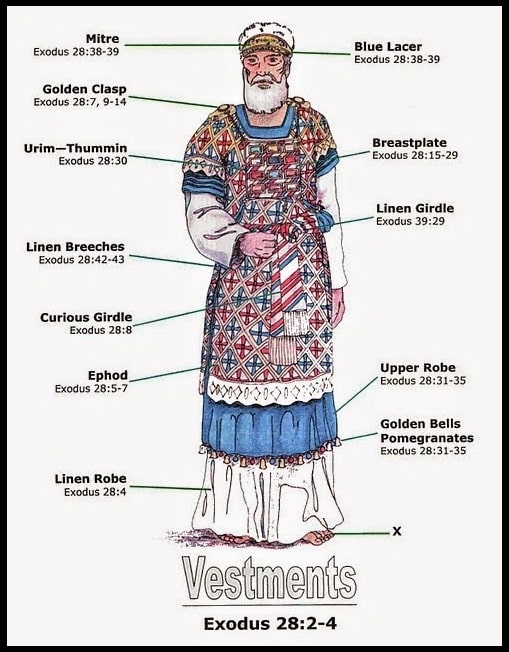
📖 Exodus 28:4–5 – *”And these are the garments… a breastplate, and an ephod, and a robe, and a broidered coat…”
🔎 Every piece matters:
🔹 Each garment symbolized an aspect of the priest’s role—from carrying the tribes (breastplate), to judgment (ephod), to intercession (robe).
🔹 The colors match the tabernacle—the man was to reflect the sanctuary.
➡️ Christ Connection: Jesus is our great High Priest—clothed in righteousness and bearing our names before the Father (Hebrews 4:14–16).
Exodus 28:6–14 – The Ephod and Shoulders of Burden
📖 Exodus 28:6–8 – *”And they shall make the ephod of gold, of blue, and of purple, of scarlet, and fine twined linen… the curious girdle of the ephod… shall be of the same.”
🔎 Woven for representation and unity:
🔹 The ephod was a symbol of representation, joining the high priest to the tabernacle and to the people.
🔹 Its colors reflected the sanctuary itself—showing the priest was a living extension of God’s presence.
➡️ Spiritual Insight: When we serve God, our lives must reflect His sanctuary—holy, united, and purposeful.
📖 Exodus 28:9–12 – *”Thou shalt take two onyx stones, and grave on them the names of the children of Israel… six on each stone…”
🔎 Bearing the names of God’s people:
🔹 These stones were worn on the shoulders—the place of strength and burden-bearing.
🔹 The high priest carried the full weight of the tribes before God, symbolizing intercession and accountability.
➡️ Christ Connection: Jesus, our High Priest, carries His people on His shoulders—the Shepherd who bears the lost sheep home (Luke 15:5).
📖 Exodus 28:13–14 – *”Thou shalt make ouches of gold… and two chains of pure gold at the ends…”
🔎 Bound in glory:
🔹 The gold settings and chains secured the ephod—glory held the burden in place.
🔹 Intercession is not only strength, but beauty—God honors those who carry others in prayer.
➡️ Ministry Reminder: True leadership in God’s kingdom means bearing burdens in love and holiness, just as Christ does.
Exodus 28:15–30 – The Breastplate of Judgment
📖 Exodus 28:15–21 – *”And thou shalt make the breastplate of judgment… foursquare it shall be… with four rows of stones…”
🔎 The heart of intercession:
🔹 The breastplate was placed over the heart—where the twelve stones, each engraved with a tribe’s name, rested.
🔹 The high priest didn’t just bear names on his shoulders (burden), but on his heart—love and remembrance before God.
➡️ Christ Connection: Jesus carries us not only in strength but in compassion and deep love (John 10:14–15).
📖 Exodus 28:22–25 – *”And thou shalt make upon the breastplate chains at the ends… of wreathen work of pure gold…”
🔎 Secure in glory:
🔹 Gold chains bound the breastplate to the ephod—a union of authority and compassion.
🔹 Intercession is not just function, but glory in action—unbreakable and beautiful.
➡️ Spiritual Insight: What God binds to His heart, no man can separate (Romans 8:38–39).
📖 Exodus 28:26–30 – *”And thou shalt put in the breastplate of judgment the Urim and the Thummim… and Aaron shall bear the judgment of the children of Israel upon his heart…”
🔎 Divine discernment and representation:
🔹 The Urim and Thummim were mysterious tools for discerning God’s will—placed inside the breastplate.
🔹 The priest didn’t just represent the people—he sought God’s righteous decisions for them.
🔹 Judgment here means discernment, not condemnation—a plea for mercy and truth.
➡️ Christ Connection: Jesus is our Advocate—not condemning us, but pleading for us with perfect wisdom and love (1 John 2:1).
Exodus 28:31–43 – Holiness and Daily Intercession
📖 Exodus 28:31–35 – *”And thou shalt make the robe of the ephod all of blue… and it shall have bells of gold and pomegranates…”
🔎 Sound and fruit in service:
🔹 The blue robe signified heavenly calling, while the bells and pomegranates symbolized testimony and fruitfulness.
🔹 The priest’s movements were heard—his ministry had sound, a reminder of presence and accountability.
🔹 Pomegranates spoke of life and abundance, emphasizing that intercession must be both bold and fruitful.
➡️ Ministry Insight: Faithful service should be heard (testimony) and seen (fruit)—never silent or sterile.
📖 Exodus 28:36–38 – *”Thou shalt make a plate of pure gold… HOLINESS TO THE LORD… that Aaron may bear the iniquity of the holy things…”
🔎 Bearing the sacred weight:
🔹 The golden plate on the forehead declared the priest’s role—to be holy and represent holy things.
🔹 He bore the imperfections of the people’s worship, a powerful picture of Christ bearing our unworthiness.
➡️ Christ Connection: Jesus sanctifies our worship—His holiness covers what ours cannot (Hebrews 10:10–14).
📖 Exodus 28:39–43 – *”And thou shalt embroider the coat… and make for them linen breeches to cover their nakedness…”
🔎 Modesty and consecration:
🔹 Even hidden parts of the garment mattered—God cares about inner holiness and outer modesty.
🔹 Every piece, down to the undergarments, reminded priests to serve with reverence and purity.
➡️ Spiritual Insight: True holiness reaches heart, mind, and body—serving God fully clothed in humility and fear.
Overview: Intercession, Identity, and Glory
🔹 Timeframe: Instructions given on Mount Sinai.
🔹 Setting: Preparation of the priesthood garments.
🔹 Theme: God clothes His representatives to serve with honor and spiritual weight.
The Garments of the High Priest – Divine Layers of Meaning
Each piece of the high priest’s garment was not only beautifully crafted—it carried spiritual and prophetic weight, declaring who God is, how He deals with sin, and how Christ ultimately fulfills every element.
🔹 The Ephod – A richly woven outer garment representing authority and representation. It connected the priest to the sanctuary and the people, just as Christ stands between God and man.
🔹 The Breastplate of Judgment – Embedded with twelve stones, one for each tribe, worn over the heart. This reflected God’s constant remembrance and care for His people. The Urim and Thummim inside represented God’s will and perfect justice.
🔹 The Robe of the Ephod (Blue Robe) – A symbol of heavenly calling and priestly intercession, with golden bells and pomegranates. It taught that the priest’s work must produce both sound (witness) and fruit (holiness).
🔹 The Golden Crown – Engraved with HOLINESS TO THE LORD, it was worn on the forehead. It signified that the priest bore the sacred responsibility of worship and stood in the gap for imperfect offerings.
🔹 Linen Tunic and Breeches – Inner garments for modesty and consecration. Even what was unseen had to be holy—reminding us that inward purity matters most to God.
➡️ Christ Connection: Every garment whispers the Gospel. Jesus is our High Priest who carries us, intercedes for us, and wears holiness for our sake. Through Him, we are now clothed in garments of salvation (Isaiah 61:10).
The Urim and Thummim – Discerning the Will of God
Though mysterious in nature, the Urim and Thummim were sacred tools placed within the breastplate of judgment to aid in spiritual discernment and divine guidance (Exodus 28:30).
🔹 Names Meaning – Urim means “lights,” and Thummim means “perfections” or “completeness.” Together, they speak of light and truth—suggesting clarity and purity in God’s responses.
🔹 Divine Decisions – These were used when clear guidance was needed on national or priestly matters (Numbers 27:21; 1 Samuel 28:6). While their exact operation is unknown, they represent God’s willingness to direct His people.
🔹 Carried on the Heart – The high priest wore them in the breastplate—discernment was never detached from love and intercession. They were not just about answers, but about seeking God in holiness.
🔹 Prophetic Fulfillment – Jesus is now our Urim and Thummim—our Light and our Perfection (John 14:6). He is the one who reveals the Father’s will through His Spirit, Word, and intercession (John 16:13).
➡️ Spiritual Insight: God never leaves His people without guidance. In Christ, we don’t need mysterious objects—we have His Spirit, His Word, and His voice through prayer.
Key Takeaways
🔑 Priesthood is a divine calling, not a human invention.
🔑 Every garment detail points to Christ, the true High Priest.
🔑 Holiness and beauty go hand-in-hand in God’s service.
Prophetic Patterns & Dual Fulfillment
🔮 The high priest’s garments – Point to Christ who bears us before the Father (Hebrews 4:14–16).
🔮 The engraved stones – Reveal God’s remembrance of His people (Isaiah 49:16).
🔮 The golden plate: HOLINESS TO THE LORD – Fulfilled in the sanctifying work of Christ (John 17:19).
Historical & Cultural Context
📜 Priestly garments – Worn only by Aaron’s line; separated by tribe and calling.
📜 Colors and fabrics – Matched the tabernacle—linking the man to the sanctuary.
📜 Symbolism – Every item preached holiness, intercession, and divine representation.
Final Reflection: Are You Wearing His Holiness?
The priest bore the people’s names, carried their burdens, and stood in God’s presence.
📌 Are you willing to be set apart and serve with reverence?
📌 Are your garments spiritual—washed, clean, and holy?
📌 Are you reflecting the beauty and honor of your calling?
🚀 Let your garments declare His glory. Serve in holiness.